
Chancellor of the Exchequer Rachel Reeves may have extended the freeze on fuel duty until September 2026, but some motorcycle industry groups have criticized the latest Autumn Budget, saying it falls short in supporting the bike market’s adaptation and evolution for the future.
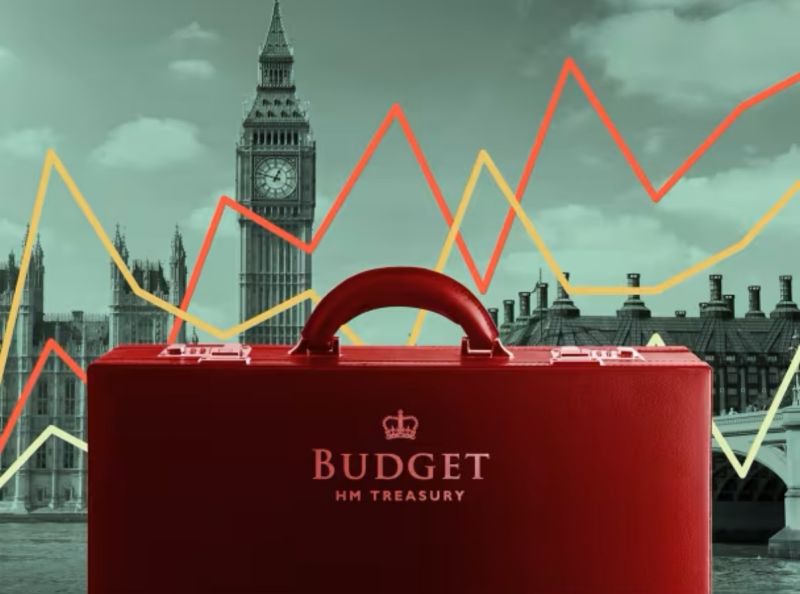
On Wednesday, November 26, a Labour frontbencher announced that the five pence cut to fuel prices, introduced in 2022, will begin to be reversed starting next September. From April 2027, fuel duty rates will be adjusted each year in line with the Retail Price Index (RPI), which tracks the average changes in the prices of goods and services.
“Drivers will be relieved the Chancellor has decided to keep the 5p duty cut in place for now as it saves them more than £3 a tank. But this relief will be very short-lived given the staggered increase from next September,” RAC Head of Policy, Simon Williams said in response to the announcement.
“The introduction of the long-awaited Fuel Finder in early 2026 will also be a big moment – for the first time, all petrol stations will need to report their prices allowing customers to find the cheapest fuel wherever they are.”
Starting in 2026, the Fuel Finder mentioned by Simon Williams will launch, giving drivers access to near real-time fuel pricing through apps, sat-nav systems, and other participating tools.
The Competition and Markets Authority will oversee compliance, with fines on the table for anyone who breaks the rules.
On November 25, just a day before the budget was announced, a 152,000-signature petition was delivered to Downing Street asking the Chancellor to at least keep fuel duty frozen. MPs in attendance included Conservative ministers Lewis Cocking, Wendy Morton, Aphra Brandreth, and Peter Bedford.
Motorcycling after petrol
Putting fuel prices aside, groups like the Motorcycle Industry Association (MCIA) believe more could have been done to support the two-wheeled sector in moving traditional combustion engines.
“This Budget once again pours billions into the electric car sector while offering nothing for low or zero emission mopeds and motorcycles,” MCIA Chief Executive, Tony Campbell said.
“It is a car-centric approach that ignores the reality: mopeds, motorcycles and light vehicles cut congestion, use far less energy, generate far less carbon in production and have a lower environmental footprint than cars.”
As part of the Budget plan, a £1.3 billion extension has been confirmed for the Electric Car Grant, which will now run until 2029-30. However, the Plug-in Motorcycle Grant is still scheduled to end in April 2026, offering just 35% off up to £500 for motorcycles priced at £10,000 or less. Mopeds can get the same 35% discount, capped at £150.
“If the Government is serious about decarbonising transport, it cannot keep treating our sector as an afterthought,” Campbell continued. “Extending the Electric Car Grant while letting the Plug-in Motorcycle Grant expire makes no sense – environmentally, economically or politically.
“We are calling for immediate parity of treatment. Without basic fiscal support, the UK will fall behind, and consumers will simply be priced out of cleaner, more efficient mobility.”
The budget also introduced new charges for EVs, including a mileage-based fee for electric cars to go along with the existing vehicle excise duty paid by all vehicles.
It is set to arrive from April 2028 at a price of 3p per mile for full EVs and 1.5p per mile for plug-in hybrids – with the changes expected to generate £1.1billion across 2028-29 alone.
Electric motorcycles are confirmed to be exempt from this cost, while tax rates for traditional combustion bikes are set to be adjusted in line with the RPI starting April 1 next year.
Leave a Reply