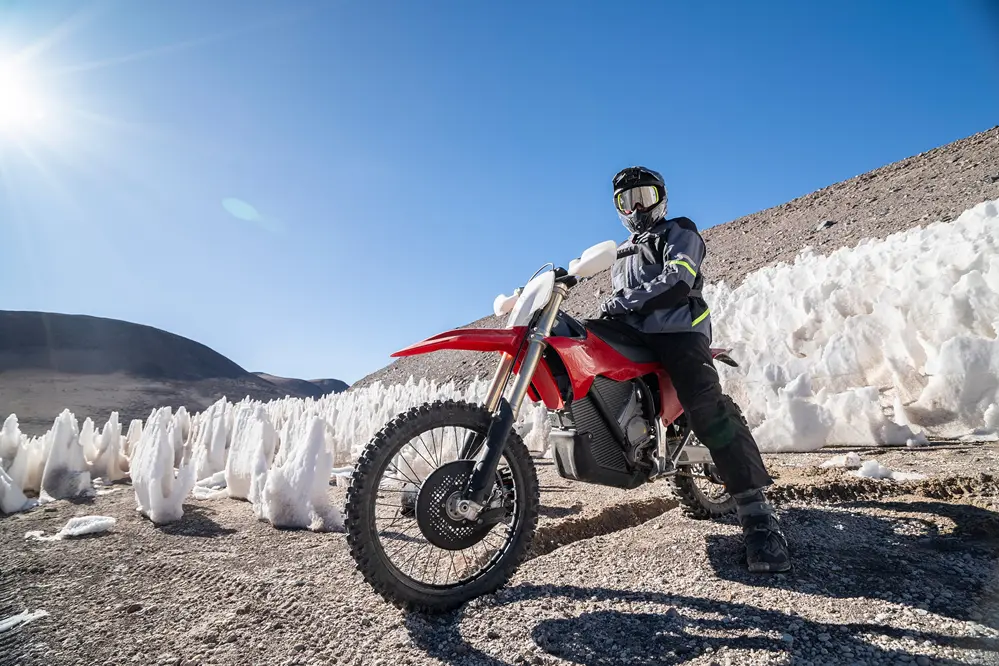
Stark Future has secured a place in the record books after Swiss mountaineer and rider Jiri Zak piloted a brand-new Varg EX enduro bike to a new high-altitude achievement on the slopes of the world’s highest active volcano with a highest altitude of 22050 foot (6721 metres).

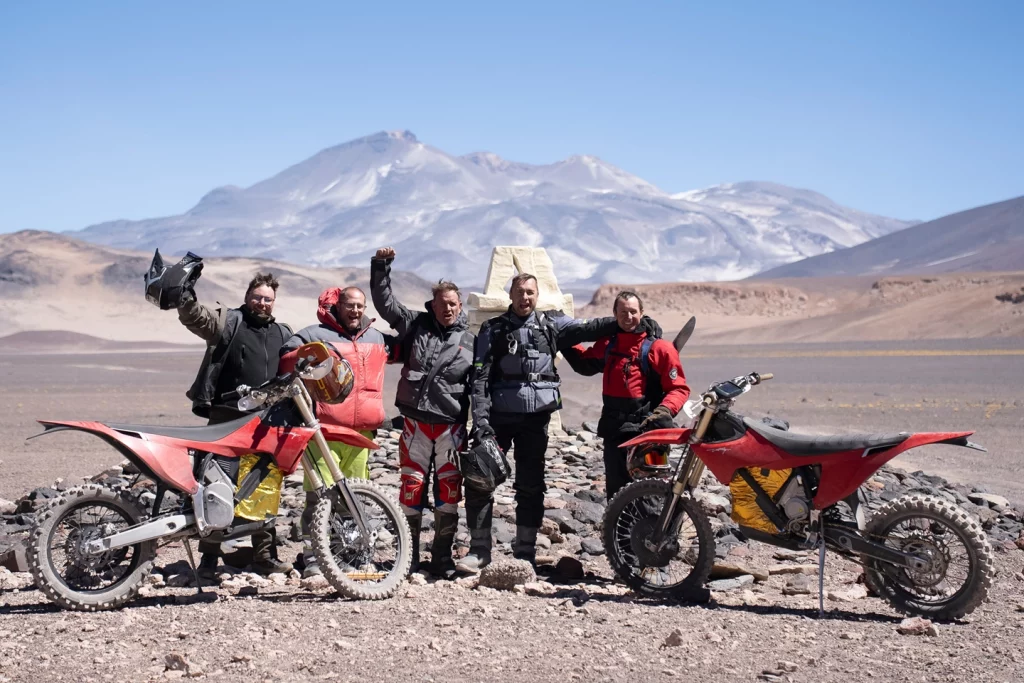
In the oxygen-deprived upper reaches of Ojos del Salado – a nearly 7,000-metre Andean giant straddling the Chile–Argentina border – Zak achieved a verified altitude of 6,721 metres on November 30. The measurement, obtained from pre-calibrated GPS devices, is pending full independent verification, with supporting witness statements and data logs to follow. “Two years ago this was just a dream, to do it on an electric bike, where combustion loses its breath,” Zak remarked. If confirmed, his feat will surpass the previous highest altitude reached on two wheels of 6,639 metres, accomplished by Francisco Rencoret, Max Rencoret, and Tomás Rencoret in the same region. It will also significantly exceed the prior electric motorcycle altitude record of 6,080 metres, set by Francisco Contardo during a KTM-supported attempt in 2015.
In March 2024, Yamaha claimed to have surpassed the existing motorcycle altitude record when rally rider Pol Tarres piloted a YZ450FX to an elevation of 6,756 metres, though Guinness World Records has yet to officially confirm the achievement. In the realm of four-wheeled vehicles, Porsche also made its mark in the high Andes; on December 2, 2023, racer Romain Dumas established a new record by driving a significantly modified 911, powered by eFuels, to an altitude of 6,721 metres.
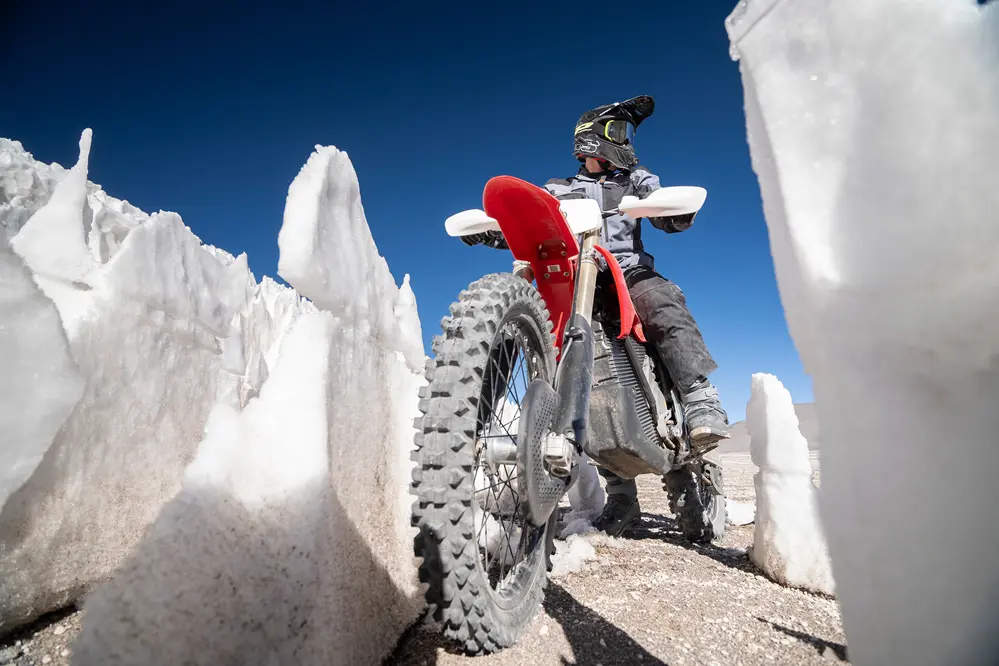
The mountainside brings freezing temperatures, loose volcanic gravel, brutal inclines, unpredictable weather, and thin air that’s hard to breathe or burn. That last factor made the Varg perfect for the job. Combustion engines need an ideal air-to-fuel ratio of 14.7:1 by mass, with oxygen making up about a fifth of that air. At high altitudes, lower air pressure means less oxygen for petrol engines, cutting their power. But the Varg, powered by a 7.2kWh battery, had no such disadvantage.
Stark Future CEO Anton Wass said, “This was never about a single number. It’s about showing that electric is no compromise. The Varg platform can perform at the edge of the atmosphere, giving riders the control to move safely and efficiently even in extreme conditions. Next stop? The moon.”
The climb was tackled on a stock Varg EX, the company’s first road-legal bike, adapted from their original motocross platform and launched earlier this year. Stark offers two versions: a £10,900 model with 59bhp and the £11,900 Alpha with 79bhp. It comes with an Android-powered Arkenstone display for adjusting power modes, sharing routes, and navigation, plus options for different wheels, tyres, and brakes, along with factory-set suspension based on rider weight. The attempt was filmed for verification, capturing route choices, traction control, and how the battery and electronics handled low-pressure, freezing conditions.
Leave a Reply