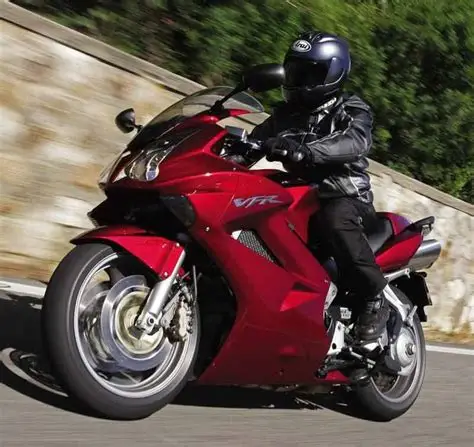
It’s one of the few ‘sensible’ cult bikes in the world and a machine with remarkably few flaws.
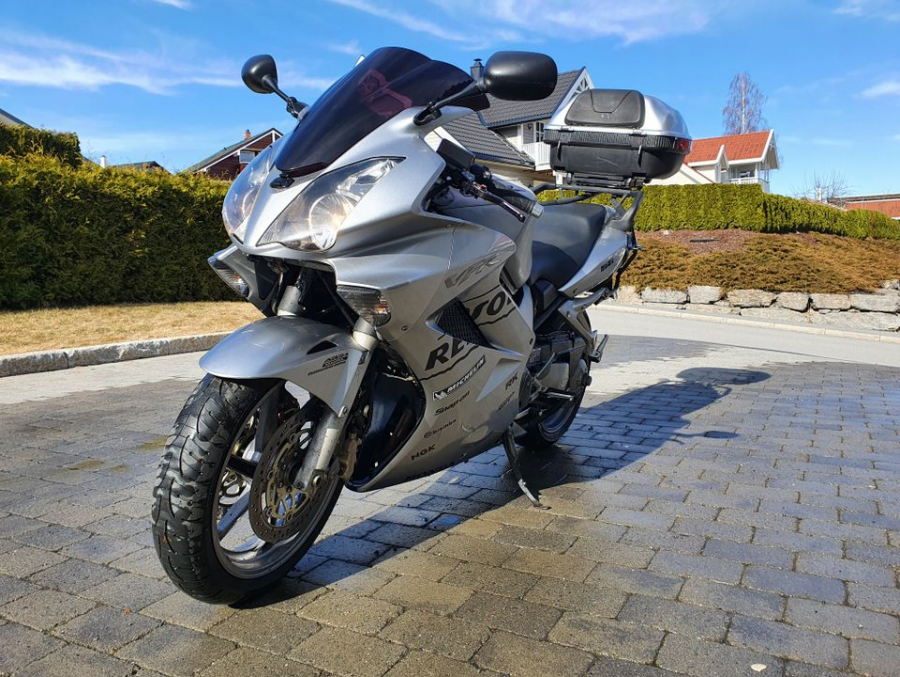
The best bike in the world? At the time, yes. The VFR excelled in every aspect, performing each task with exceptional competence. It was truly a jack of all trades, mastering many of them with ease. Capable of handling all types of riding—from track days to touring and commuting—it combined remarkable reliability with superior build quality. Moreover, its V-four engine delivered just enough raw, rugged edge to imbue it with character and avoid the common criticism that Hondas lack excitement. While there may be more advanced machines available today, the VFR remains a refined, versatile motorcycle that offers an immensely satisfying ride.
Nige and Em have extensively toured on their VFR, often incorporating camping into their trips. Even when riding two-up with a full three-pannier setup and a tank bag, the bike remains exceptionally nimble and capable, demonstrating its versatility and performance under varying loads and conditions. Nige describes the VTEC as highly addictive, noting that beyond the captivating sound, the remarkable and seamless power delivery is truly extraordinary.
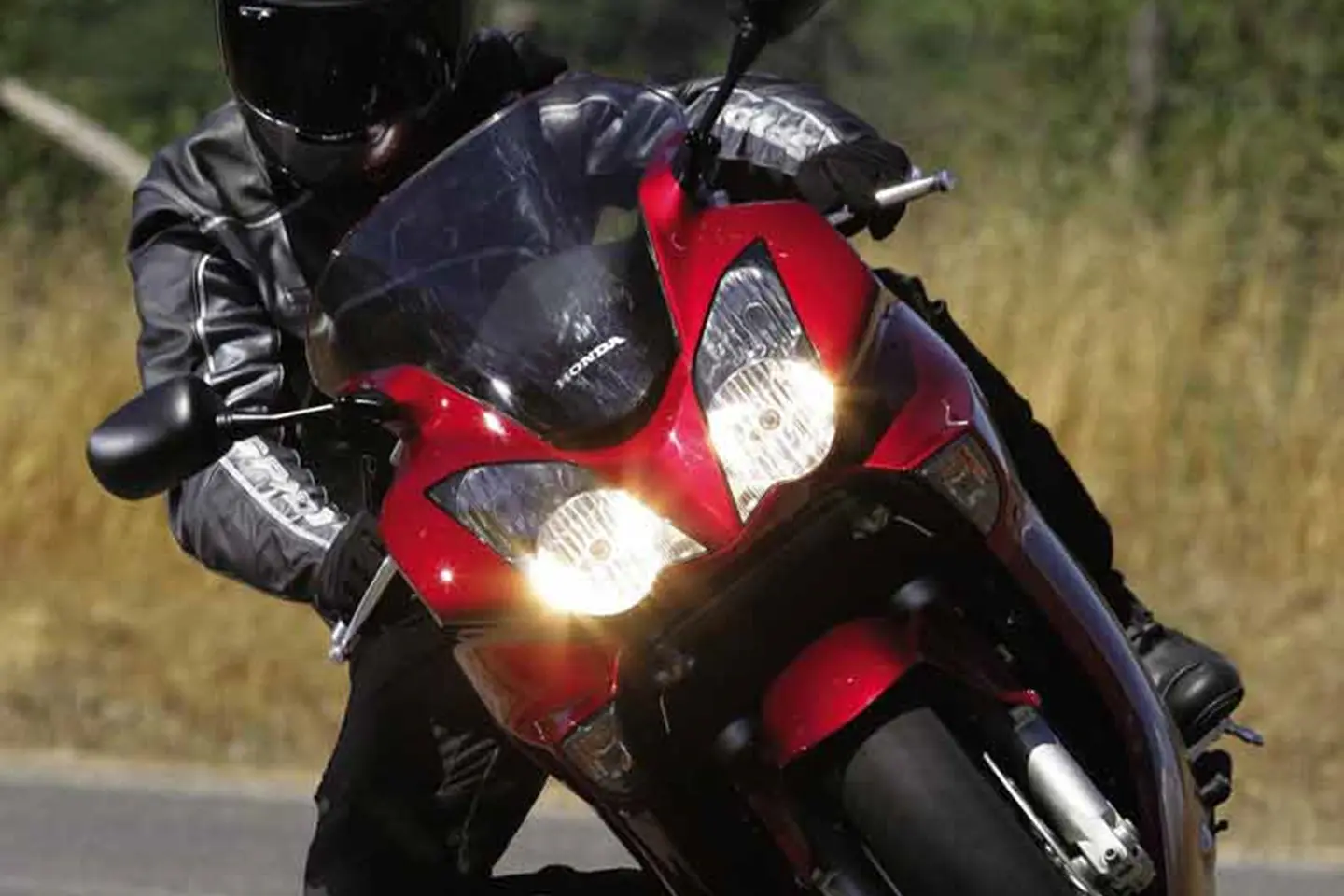
Let’s talk about VTEC. In 2002, Honda introduced its Valve Timing Electronically Controlled (VTEC) system to the VFR, requiring an all-new engine. Using an oil-operated actuator to disable two of the four valves per head (one intake, one exhaust), the VFR switches between a two-valve setup at low revs for strong low-end power and a four-valve setup at high revs for better top-end performance. Engaging at 6800rpm, VTEC aimed to offer the best of both worlds, but early models had an irritating ‘hiccup’ when it kicked in, making it annoying to hold steady motorway speeds. In 2006, Honda tweaked the system, lowering engagement to 6600rpm and smoothing the transition by factoring in throttle and gear position, making it much more seamless. So, if VTEC worries you, opting for a post-2006 model (with clear indicator lenses instead of the earlier orange ones) is the safest bet. But should it be a concern?
The engagement of the VTEC system is distinctly perceptible, yet with familiarity, its operation—even in early iterations—proves to be far from inadequate. More critically, it performs its intended function effectively, providing the VFR with a robust surge of low-end torque complemented by a gratifying burst of power in the upper rev range.
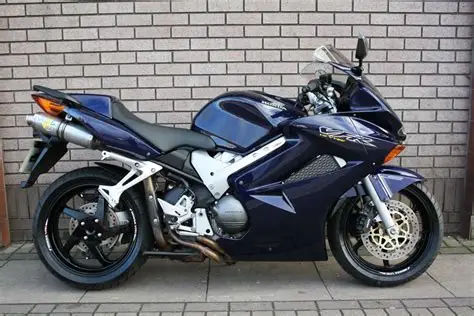
Don’t expect to find a decent example of either for cheap. The used market is packed with VFR800 VTECs, and dealers are usually happy to sell older models thanks to their reliability. If you’re buying from a dealer, set a minimum budget of around £3000 for bikes with under 20,000 miles, while late-model versions with full luggage can reach close to £4000. In private sales, you might find a high-mile VFR for as little as £1300, but it will likely show signs of a hard life. Spend between £2000 and £2500, and you should land a tidy example with a solid service history and 20,000–30,000 miles, ideally with luggage included.

Article written by Nige.
Last update: January 2026
Nige commutes to work on one of his ‘trusty’ bikes throughout the year, no matter the weather.
He has ridden all over the UK and mainland Europe. He has owned more bikes than he likes to admit to.
We may receive a commission if you purchase a product using the affiliate links on any page of this website. This is at no cost to the purchaser, however does support our website and helps us to continue to build with more great content.