The BMW F650GS possesses a distinguished heritage, characterized by its enduring reputation for quality and performance, and is offered in a diverse array of variants that cater to a wide spectrum of rider preferences and requirements.
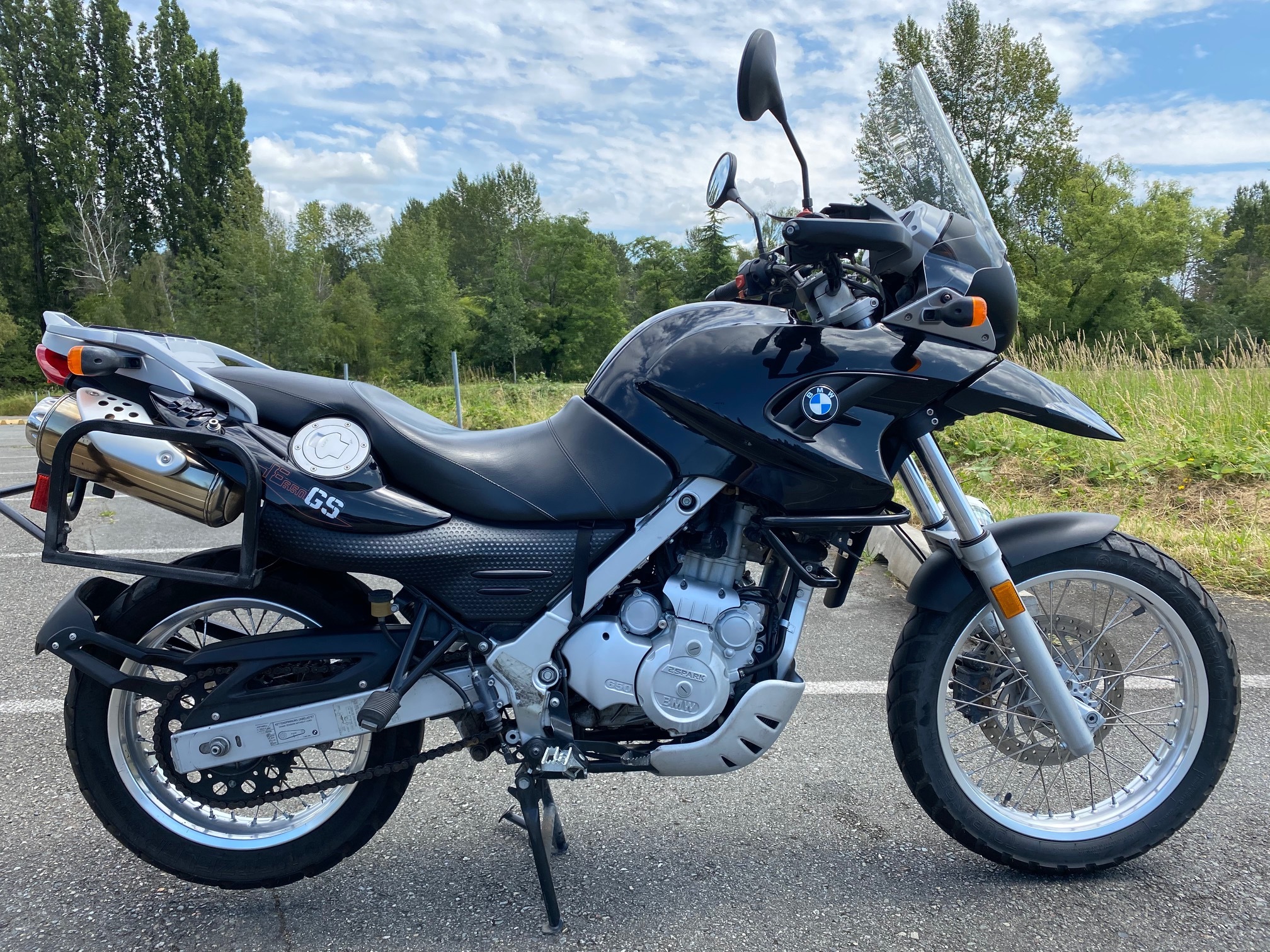
There’s nothing wrong with no-frills motoring, and if you’re after a cheap, reliable commuter that can also handle a bit of green lane fun on the weekends, BMW’s F650GS models are worth a look. But what exactly are they? You might think F650GS means a parallel twin engine, but not in this case. Sure, BMW’s parallel twin, launched in 2008, was also (confusingly) called the F650GS in its more road-focused form despite having a 798cc capacity. Here, though, we’re talking about the original F650GS, which packs a single-cylinder engine with a 652cc capacity.
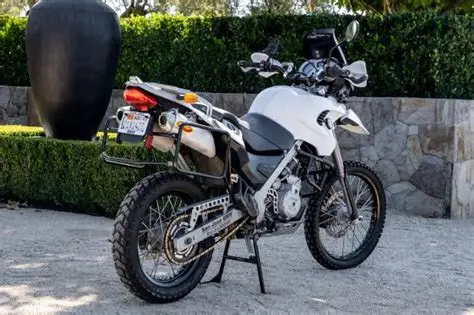
First introduced in 1993 as the F650 Funduro and powered by a Rotax-designed engine manufactured by Aprilia, the F650 underwent significant development in 2000, emerging as the F650GS with a comprehensively updated engine and chassis. Produced until 2007, when it was succeeded by the F650GS (in name only) and later the less notable G650 models, the single-cylinder GS is a motorcycle that, while simple in nature, excels in fulfilling its purpose. Renowned for its reliability and versatility, it has cultivated a strong global following. Although it may not deliver exhilarating performance, it performs every task reliably, making it an excellent choice for a winter commuter. Its straightforward design also allows for easy home maintenance, offering additional cost savings to its owners.
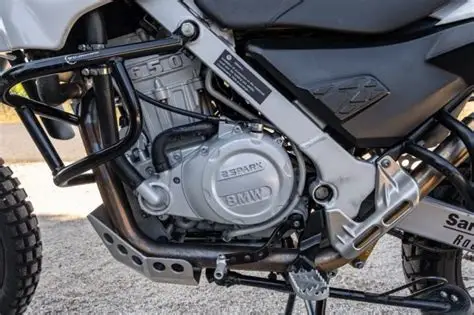
With just 50bhp and 44ftlb of torque, the F650’s single-cylinder engine isn’t exactly a powerhouse, and performance isn’t its strong suit. Unlike a modern single like the KTM 690, which delivers impressive acceleration and a lively, fast-revving character, the BMW’s motor is built for steady cruising and reliability. A modest redline just over 8000rpm means there’s need to chase power through high revs—though there’s not much to find there anyway. It feels exactly as it is: old, dated, but content to thump along at a relaxed pace, with a fair share of vibrations. Over its lifespan, the F650GS only saw one significant engine update in 2004, introducing a twin-spark design and refined management system, claimed to improve fuel economy and lower the torque peak—but in practice, you’d be hard-pressed to notice while riding. The engine is tough, and seeing GS models with over 40,000 miles isn’t uncommon, which is reassuring for used buyers. Still, there are a few known weak spots: the water pump’s plastic gears can become brittle and snap with age, and the pump’s seal is prone to failure. At about £50 for replacements, it’s worth updating both as a precaution. Keep an eye on the temperature gauge when idling—if it starts to climb, the pump may need attention. While checking, inspect the radiator for corrosion or leaks and ensure the fan operates properly. The GS has only a five-speed gearbox, so don’t expect a sixth, but do check the casing around the front drive sprocket, as its nut can work loose and cause damage. As a preventive step, make sure it’s tight and consider adding a dab of thread lock.
BMW said the new BMS-C II engine management system, launched with the twin spark head, improved the GS’s fuel economy by 6% at 56mph to 88mpg and by 14% at 75mph to 65.7mpg. In practice, most owners see closer to 65mpg across various riding conditions on both generations, which is still impressive and gives the 17.3-litre tank a range of over 250 miles between fill-ups.
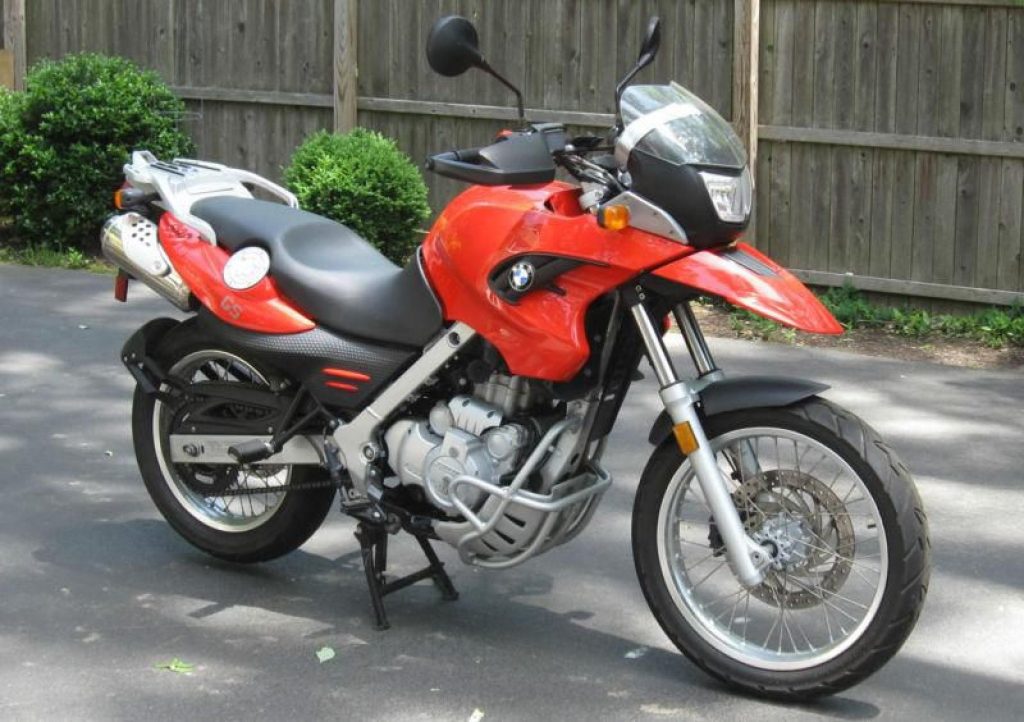
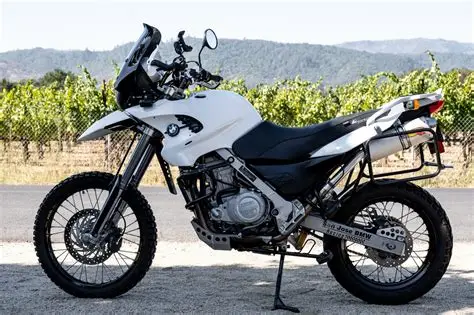
The F650GS wasn’t designed as a sporty bike, though it does have a slightly sportier cousin, the F650CS, which is admittedly quite unattractive but comes with 17-inch wheels and a handy storage space in the tank area. It rides like an old-school enduro—fun enough, but push it too hard and the weak suspension makes things a bit wobbly. The standard GS has a 19-inch front wheel, giving it better handling than the Dakar’s 21-inch setup and a lower seat height. For shorter riders, the Dakar’s 870mm seat might be a stretch, while the GS’s 780mm is much more approachable. As with any bike sporting spoke wheels, it’s important to check the rims and spokes for rust or bends, and keep an eye on the bearings, as they can wear out quickly. Many owners note that older models can develop wiring loom issues, which isn’t surprising, so always check the electrical system and watch out for a bike with a dodgy battery, as it could mean the reg/rec is failing and cooking the battery. A replacement costs around £80, but the concern is how many wires may have overheated before you replaced it. Not really the GS’s fault, but also inspect the forks for damage, bends, or leaking seals, and check the shock linkages for wear and that the shock still has life in it. There’s a good chance the preload adjuster will be seized solid—most are—so test if it moves at all. Keep in mind this is a fairly old bike often used as a hack and can be bought for under £1000, so assume it’s been crashed at some point. If the spill was low-speed, that’s fine, but look for signs of a bigger accident like bent bars or twisted forks—these should be caught at MOT, but you never know.
BMW offered ABS as an option on the GS; however, it is generally advisable to avoid this feature on older models, as it presents another potential point of failure, with sensors prone to malfunction. Even under normal conditions, performance is not exceptional, and during winter commuting the single two-piston front caliper can become severely sticky on its slider. While a rebuild kit costs only around £40, in most cases a thorough cleaning and light abrasion to remove corrosion are sufficient. Regardless, fitting new brake lines, replacing brake fluid, and installing fresh pads are always prudent measures for any pre-owned motorcycle.
The GS is a decent choice for short-hop touring, but at sustained motorway speeds the engine’s vibrations can become quite noticeable. With limited power and just five gears, the engine is constantly working hard on the highway. Stick to back roads and it’s a solid option for trips, with many models already fitted with luggage—a feature BMW addressed in an update by improving the rear rack, which can crack at its mounting point welds, so it’s worth checking.
When it comes to rider assists, the only option is ABS—not that the F650GS really needs more. As for accessories, it typically sports commuter favorites like a top box, luggage, a taller screen, and heated grips. The updated model comes with a standard 12V output, which is handy but easy to add later, though it’s worth being cautious about overloading the generator with too much heated gear. Beyond that, it’s mostly a matter of adding crash protection, brush guards, and perhaps an aftermarket exhaust or two.
The F650GS is a dependable choice for daily commuting, offering solid performance and reliability. While the Dakar variant provides enhanced off-road capability, its tall seat height may not suit all riders, making the standard model a more practical option for many. For those seeking a motorcycle to handle winter conditions, the F650GS represents a strong value at under £1500, and it should retain much of its resale value when the riding season resumes in March or April.

Article written by Nige.
Last update: January 2026
Nige commutes to work on one of his ‘trusty’ bikes throughout the year, no matter the weather.
He has ridden all over the UK and mainland Europe. He has owned more bikes than he likes to admit to.
We may receive a commission if you purchase a product using the affiliate links on any page of this website. This is at no cost to the purchaser, however does support our website and helps us to continue to build with more great content.