
Rides
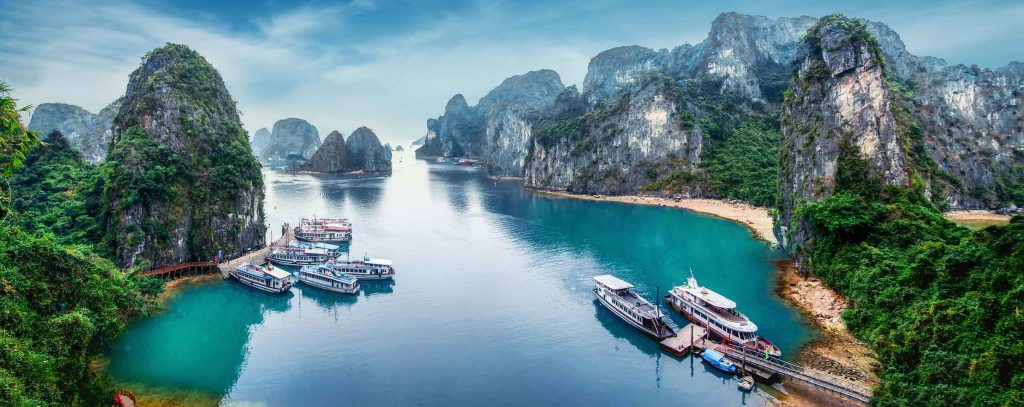
Vietnam, officially known as the Socialist Republic of Vietnam (SRV), is located on the eastern edge of Mainland Southeast Asia. Covering an area of approximately 331,000 square kilometers (128,000 sq mi) and home to over 102 million people, it ranks as the 16th most populous country in the world. One of only two communist states in Southeast Asia, Vietnam shares its northern border with China and its western borders with Laos and Cambodia. To the southwest, it faces the Gulf of Thailand, while to the east it is bordered by the South China Sea, where it maintains both shared and disputed maritime boundaries with neighboring nations. The nation’s capital is Hanoi, and its largest city is Ho Chi Minh City.
Requirements
| Carnet de Passage | no requirements |
| Insurance | required |
| International driving permit | require IDP 1968 |
| Travel Visa | no requirements, 15 days per calendar year* |
*Visa options for UK Nationals in Vietnem
- UK citizens can enjoy visa-free travel to Vietnam for up to 15 days. If staying beyond that, a visa will be required.
- E-Visa is a popular choice for UK travellers, allowing stays of up to 30 days with an easy online application process. Processing usually takes 2-3 working days. To apply, simply fill out the online form and pay the visa fee.
- Visa on Arrival is an option for travelers flying into designated international airports in Vietnam. Just complete an online application before your trip, and you’ll get your visa upon arrival. Processing at the airport usually takes about 15 to 30 minutes.
- Embassy Visa: If your stay exceeds 30 days or you’re traveling for business, you might need to get a visa from the Vietnamese Embassy in London. Processing usually takes about 3 to 10 working days.
Riding in Vietnam.
You need understandable documents.
The police can require the immediate presentation of all driving documents by the roadside, including license, logbook, and insurance, is common in most jurisdictions. If you cannot these documents in a language that the police can understand, there is a likelihood of having your bike impounded.
As a tip, it is to laminate all of your key documents or otherwise waterproof them. It is also highly recommended to scan all your original documents and email them to an easily accessible email address.
It is also worth printing off the Constat Amiable D’accident Automobile, which is used across numerous and other countries (the downloadable one on our website has English as well as French).
Permits.
Travelers may be required to obtain a permit when visiting specific regions of Vietnam, such as Ha Giang in the far north, due to its proximity to the Chinese border.
Crime.
Vietnam is generally a safe place for motorcycle travel, with locals rarely bothering tourists when it comes to violent crime. Trouble usually only comes if you go looking for it, and most visitors have no problems. Like anywhere, it’s wise to stay alert and cautious late at night. That said, overcharging is common, so watch out for that. It can also be frustrating to get clear answers, and there’s often no recourse if promises aren’t kept.
Men: Watch out for young women who might flatter you while trying to take your belongings.
Women: Be cautious, as some taxi or rickshaw drivers can become aggressive if confronted. Men and women alike may find themselves followed by drivers persistently promoting their services.
Laws and Police.
The police often don’t feel obligated to help and may see dealing with foreigners as a hassle. They can be reluctant to get involved, usually directing you to your embassy, which will likely send you back to the police. Don’t expect much effective action from them unless it’s to collect some sort of “fine” from you.
Police often avoid stopping foreigners because language barriers can slow things down and take time away from collecting fines from local drivers. However, this is not a reason to ignore the law. If they do stop you, it can cost both time and money. In some cases, paying an on-the-spot fine can make the process much quicker.
Entry paperwork is required, thankfully no visa is needed.
UK citizens are permitted to enter Japan without a visa for short-term stays, including purposes such as tourism, business, or visiting friends and family, for a duration of up to 90 days. Passports must remain valid for the entirety of the stay and contain at least one blank page to accommodate the entry stamp.
Speed limits.
In Vietnam, speed limits are determined by the type of road, with a maximum of 50 km/h within urban areas, 80 km/h on rural roads, and up to 120 km/h on expressways. Lower limits apply to motorcycles and in designated special zones to ensure safety and compliance with traffic regulations.
On expressways and highways, automobiles are permitted to travel at speeds of up to 120 km/h, whereas motorcycles are generally restricted to a maximum of 60 km/h. Specific segments of these roads may feature posted speed limits that differ from the general allowance, and all motorists are required to adjust their speed accordingly. Furthermore, in adverse weather conditions such as rain or fog, drivers must reduce their speed to ensure safety and comply with applicable traffic regulations.
In urban areas, cars are typically limited to 50 km/h, while motorcycles should not go over 40 km/h. On divided roads, the limits can rise to 60 km/h for cars and 50 km/h for motorcycles to help maintain safety on busier streets and at intersections.
On rural roads, cars can travel at speeds of up to 80 km/h, with certain divided roads allowing up to 90 km/h. Motorcycles are usually restricted to 60–70 km/h, depending on the number of lanes and the type of road.

Please note, this page was correct when written in March 2026.