Suzuki got this bike so right that everyone knows someone with one!
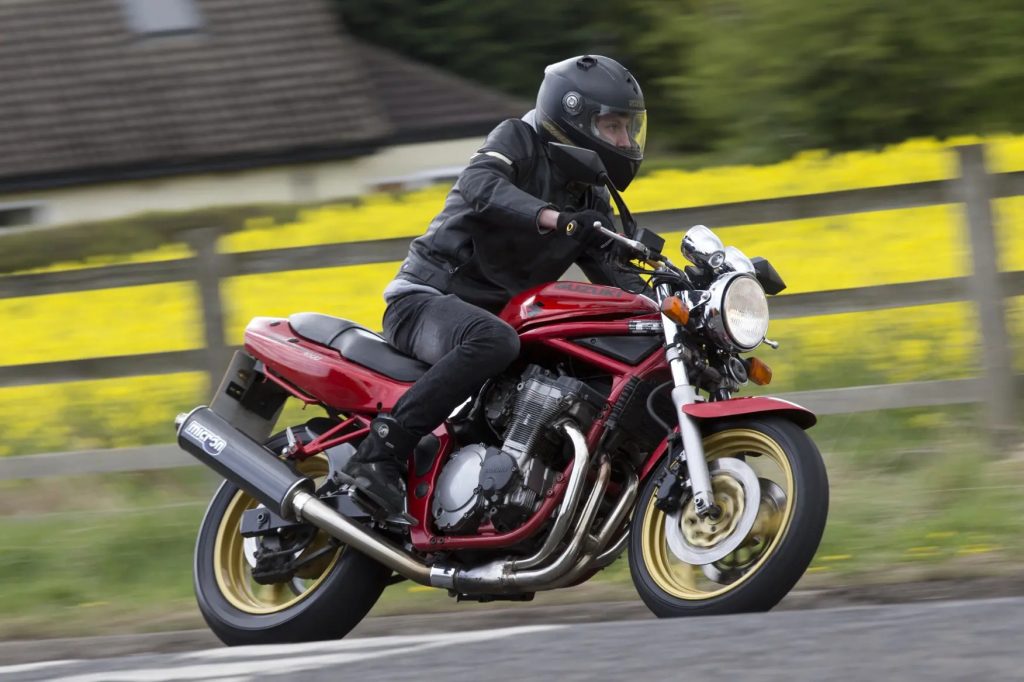
In 1995, the Suzuki Bandit hit the scene—a budget-friendly bike that delivered top-tier thrills with just a twist of the throttle. Despite its tough, moody name suggesting it might drain your wallet and stop you in your tracks, the truth was quite the opposite. There were three versions, GSF400 (not officially imported into the UK), GSF600 and the GSF1200.
In the mid-1990s, motorcycle prices were relatively high by the standards of the time, although not as elevated as they are today. This period marked the emergence of parallel imports and preceded the point at which major UK manufacturers were compelled to reduce their pricing. Consequently, when Suzuki launched an attractive new model in 1995, priced at just £3,999 and equipped with a well-proven chassis and engine, the Bandit represented exceptional value for money.
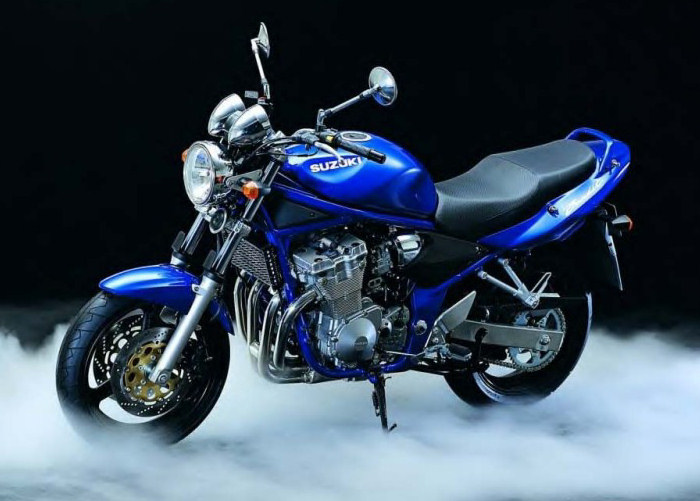
Yes, it was a true parts-bin special: the engine came from the old GSX600F ‘Teapot.’ Not the fastest, but the air-oil cooled motor was dependable (with roots tracing back to the GSX-R750F) and delivered around 70–80 bhp and a top speed of 125 mph. The whole setup was held together by a tubular steel frame, with a hint of the GSX-R’s double-cradle design, painted to match the bike’s color. Sure, the suspension was pretty basic, with only rear rebound and preload adjustment, but it still offered plenty of fun on the road—arguably more than the naked Yamaha XJ600N Diversion.
It was a blast to ride, a bike where all the budget parts somehow added up to more than expected. Even better, it had the cool name “Bandit.” Thankfully, it didn’t mimic a black Trans-Am but instead was a sharp-looking, naked “Universal Japanese Motorcycle.” Back in the mid-1990s, when fairings were all the rage, this one stood out stripped bare. It wasn’t “classically” styled either, being a single-shock rather than a twin-shock machine. Development moved slowly because sales were booming—why fix what isn’t broken? Eventually, the Bandit lineup went head-to-head with the Honda FireBlade for sales supremacy. And yes, it became a true family: the half-faired S-model 600 arrived in 1996 for £4699, followed by the Bandit 1200 a year later (also in a half-faired version), with the naked B12 priced at just £5999.
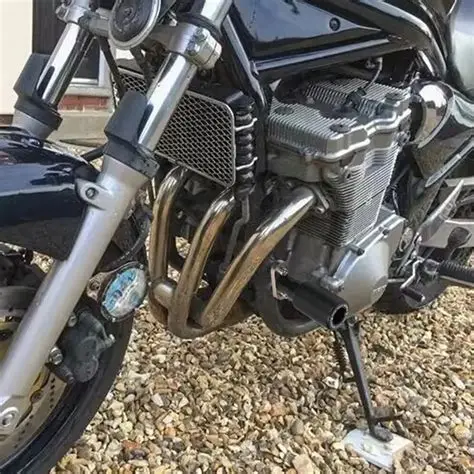
If there were two significant weaknesses to note, they would be the quality—or, more precisely, the lack of quality—of the finish and the inherent characteristics of the suspension’s overall feel.
Over time, the naked middleweight class experienced a surge in variety and popularity, with models such as the Honda Hornet, Yamaha Fazer, Ducati Monster in various engine capacities, and later the Kawasaki Z750, all contributing to the segment’s rapid evolution.
As competition intensified, the Bandit was compelled to evolve. The original model, produced from 1995 to 1999, initially carried a price tag of £3,999, which rose to £4,499 in 1997/98 before dropping to £3,798 in 1999 as UK importers responded to the surge in parallel imports. In 2000, a new model was introduced, featuring a revised frame and altered styling on the half-faired version, although the engine remained largely unchanged. This iteration, which also saw a 3mm increase in wheelbase, was regarded as less visually appealing and seemed to have lost some of its former character. Priced at £4,649, it remained competitively positioned. Its successor, launched in 2005 as the Suzuki GSF650 Bandit, offered a larger, updated engine and refreshed styling, retailing at £4,239.
Prices? There’s something to suit every budget. Spares bikes can be found for a few hundred quid, while decent ones start at around a grand to £1500. We’ve even seen low-mileage models go for about £2800… It’s a classic, honestly.
The bandit has a huge following, many companies produce accessories and spares for them and I would think it is one of the most customised bikes out there, only yesterday I saw a 28 ltr fuel tank and smaller seat for sale on social media!
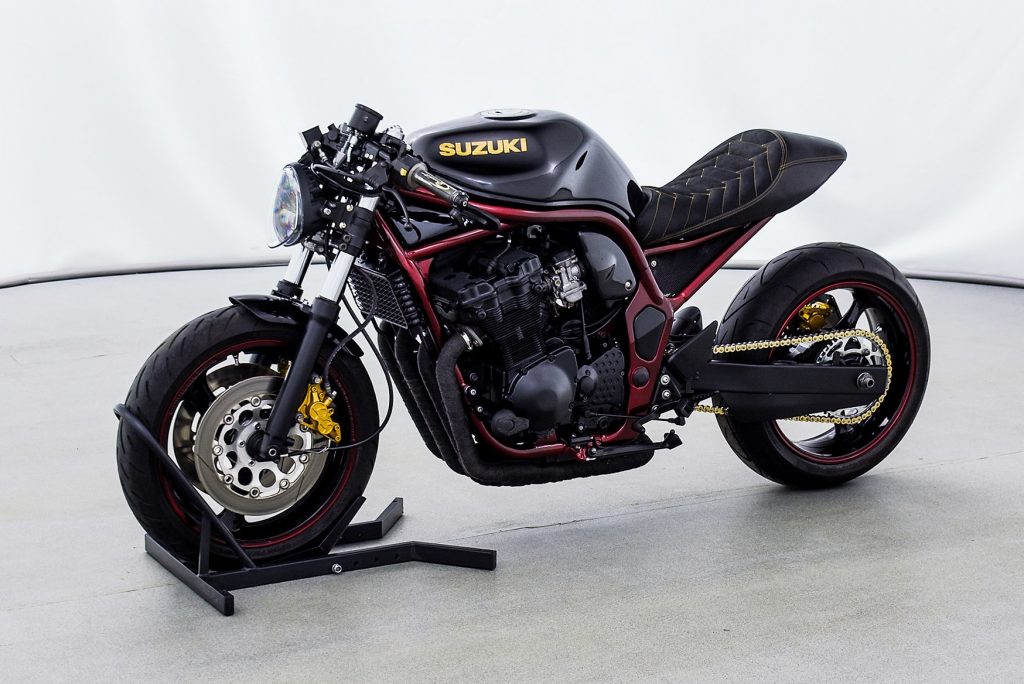
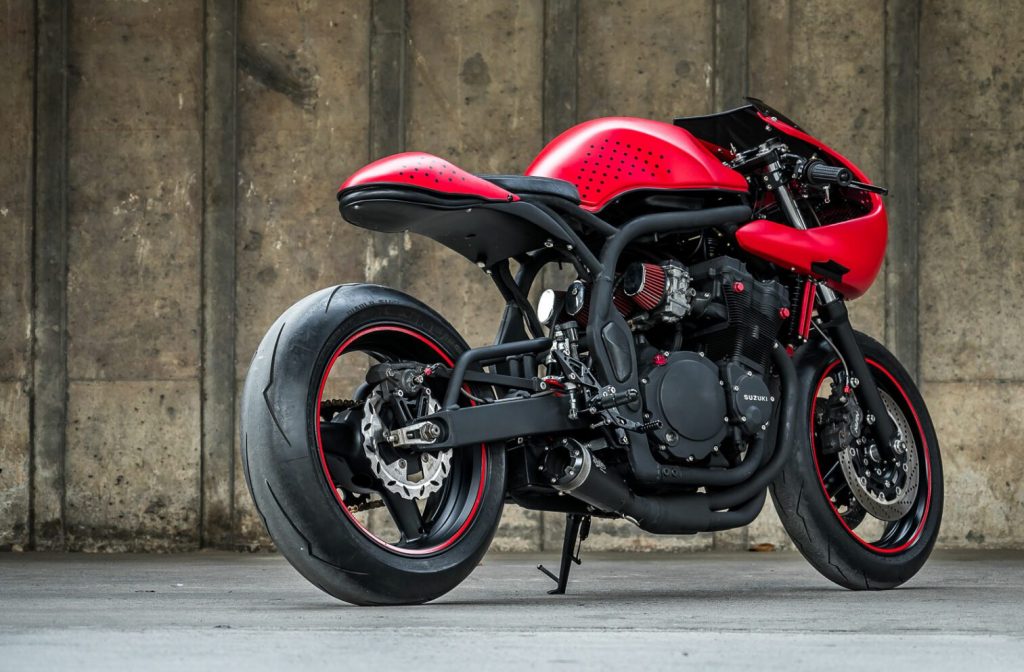
Although some parts from a 600/1200 will fit a 400, they are actually quite a different bike.
While there may be a wide array of colours out there, however, the official Suzuki options were Red, Grey, Green, Black, Blue, Silver, Yellow, White/Blue, and Black/Silver.
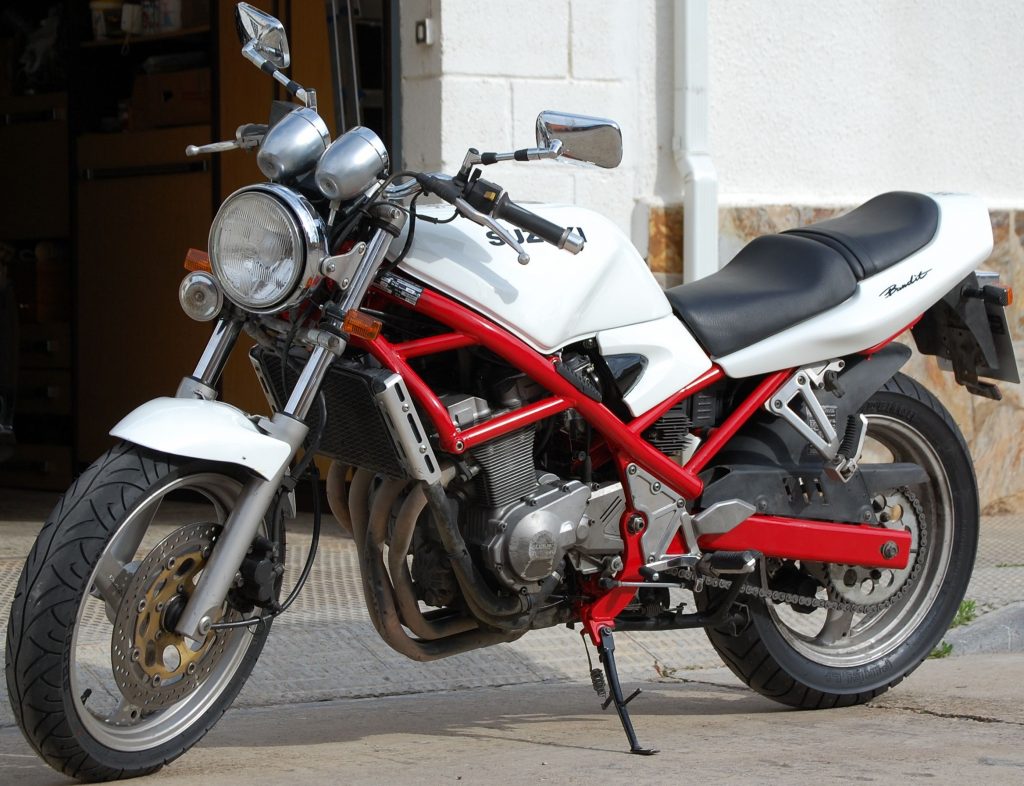
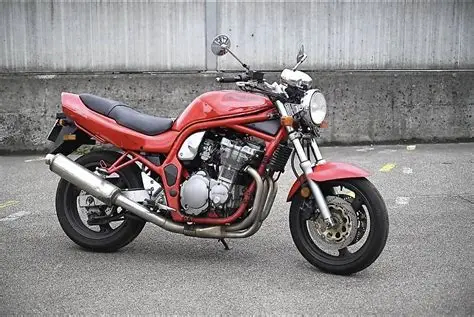
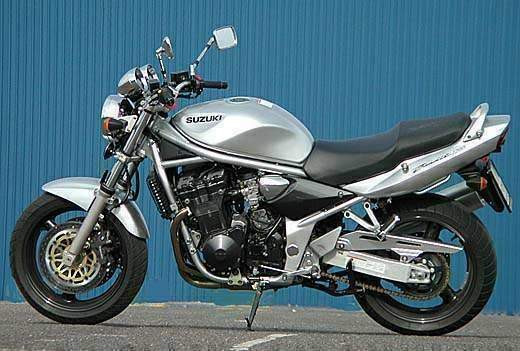
Suzuki Bandit GSF400
- Engine: Inline-four, four-stroke, DOHC, 16 valves, air/oil cooled
- Displacement: 398 cc.
- Power: 59 hp (44.1 kW) @ 12000 RPM.
- Torque: 35.2 Nm (26 lb-ft) @ 9500 RPM.
- Top Speed: 110 MPH (177 km/h).
- Weight: 168 kg (370 lbs).
Suzuki Bandit GSF600
- Engine: Inline-four, four-stroke, DOHC, 16 valves, air/oil cooled
- Displacement: 599 cc.
- Power: 77 hp (57.4 kW) @ 10500 RPM.
- Torque: 54 Nm (39.8 lb-ft) @ 9500 RPM.
- Top Speed: 128.3 MPH (206 km/h).
- Weight: 196 kg (432 lbs).
Suzuki Bandit GSF1200
- Engine: Inline-four, four-stroke, DOHC, 16 valves, air/oil cooled
- Displacement: 1157 cc.
- Power: 98 hp (71.5 kW) @ 8500 RPM.
- Torque: 92 Nm (67.86 lb-ft) @ 6500 RPM.
- Top Speed: 143 mph (230 km/h).
- Weight: 214 kg (471.8 lbs).
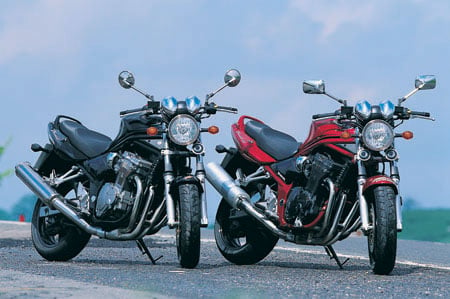
600 V 1200
While it may seem like an overstatement, the 1200 truly operates in a class of its own compared to the smaller Bandit. This distinction is primarily due to its character and the remarkable strength of its engine. On paper, a 30bhp advantage might not appear significant enough to yield such a substantial improvement in performance, yet in practice, the difference is pronounced.
As the saying goes, it’s not just the size that matters, but how you use that power—and in this respect, the larger Bandit shines, scoring higher across every performance metric. It’s not really about raw power, though; it’s about torque. Where the 600 huffs and buzzes, the 1200 simply growls and pulls away with ease. The bigger Bandit feels far more solid here, and it’s a welcome change to experience its relaxed punch after the 600’s frantic pace, which takes much more effort to keep in its sweet spot.
The 1200 is much easier to ride in every way, with more credibility and appeal thanks to its larger engine. While the 600 feels like a capable yet basic bike built to get you from A to B (with some style and excitement, to be fair), the 1200 offers far more. You can do a lot with it, and if you opt for the faired version, you can add some luggage, bring a passenger, and head off on a long journey, enjoying every moment along the way and at your destination. The less powerful 600 just doesn’t give off the same sense of versatility.

Article written by Nige.
Last update: April 2026
Nige commutes to work on one of his ‘trusty’ bikes throughout the year, no matter the weather.
Nige currently owns two GSF400 (grey imports) and a GSF600.
We may receive a commission if you purchase a product using the affiliate links on any page of this website. This is at no cost to the purchaser, however does support our website and helps us to continue to build with more great content.