Class leading, mid capacity naked.
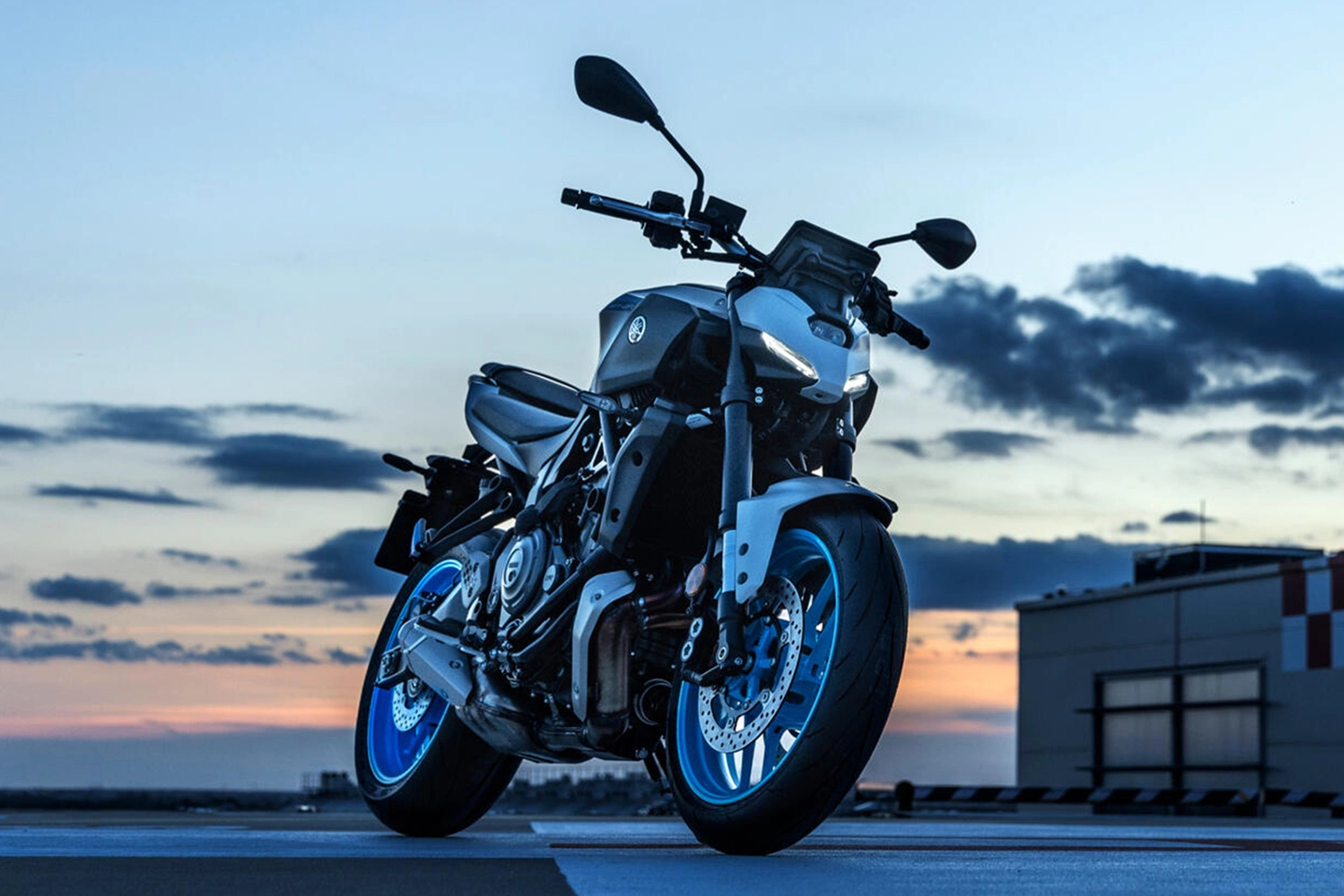
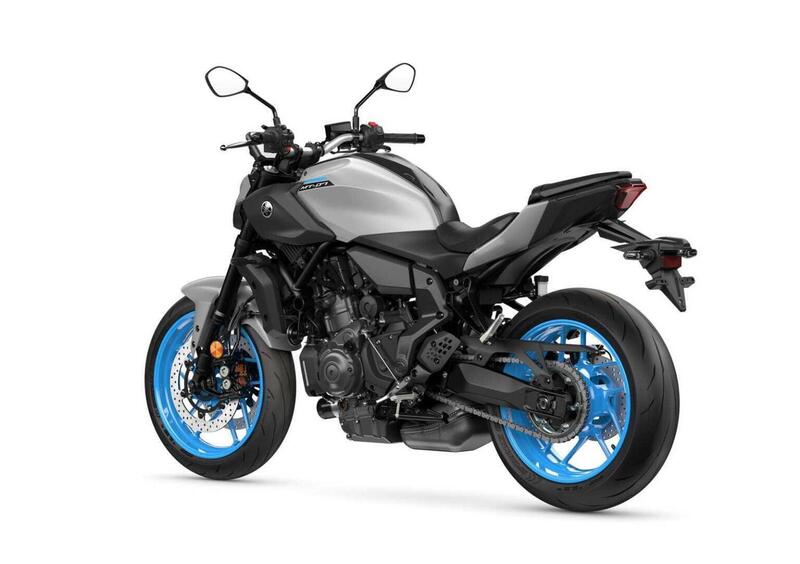
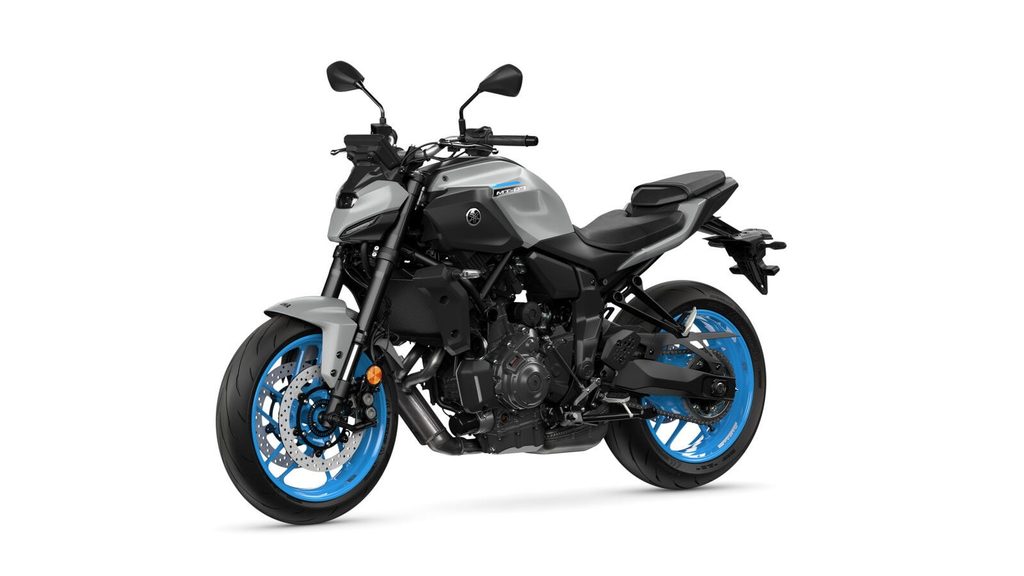
Yamaha made a significant impact with the launch of the MT-07, achieving sales of over 200,000 units since its debut in 2014. A decade later, it remains the clear leader in its class by a substantial margin. The 2025 MT-07 represents the most substantial evolution of the model to date, building on the success of a motorcycle that commanded 30% of European market share in its segment in 2024.
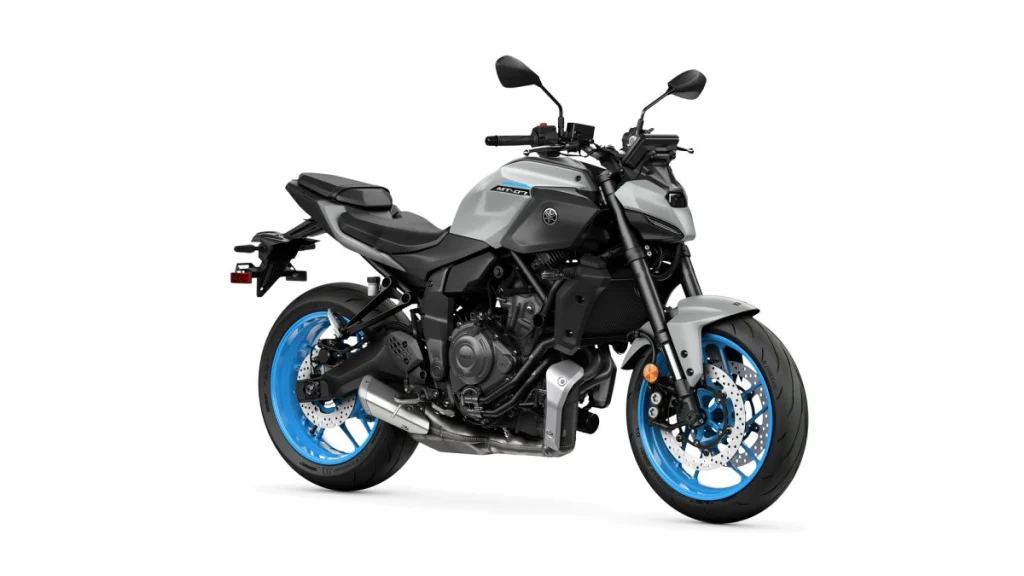
The latest model features a redesigned chassis paired with upgraded suspension, wheels, and brakes, enhancing overall handling and performance. Improved ergonomics provide greater comfort for a broader range of riders, while updated electronics offer enhanced control over various performance parameters. Additionally, the MT-07 is now available with Yamaha’s innovative Y-AMT (Yamaha Automated Manual Transmission) semi-automatic transmission as an optional feature.
Producing 72.4 hp (54 kW) at 8,750 rpm and 49.4 lb-ft (67 Nm) of torque at 6,500 rpm, the ‘CP2’ engine retains the same output as its predecessor and remains mechanically unchanged internally. However, these similarities do not imply that it is entirely identical to the previous version.
For those unfamiliar with Yamaha’s terminology, CP2 denotes “crossplane 2-cylinder,” referring to the 270-degree crankshaft firing order that gives a parallel twin engine characteristics reminiscent of a V-twin. For 2025, significant updates have been made to the electronics and intake system, mirroring revisions seen on the MT-09, aimed at enhancing the rider’s auditory experience. These include a new air cleaner, redesigned intake ducts and funnels, and a “sound enhancer” comprising small grilles atop the fuel tank cover that channel the engine’s intake roar toward the rider without increasing external noise. The result is a more aggressive, raspier tone that heightens the emotional engagement with the bike. The 689cc CP2 engine continues to deliver performance beyond its class, offering both thrilling dynamics on winding roads and user-friendly handling in urban traffic. A slightly sharper throttle response for 2025 makes the MT-07 feel livelier and marginally quicker when needed.
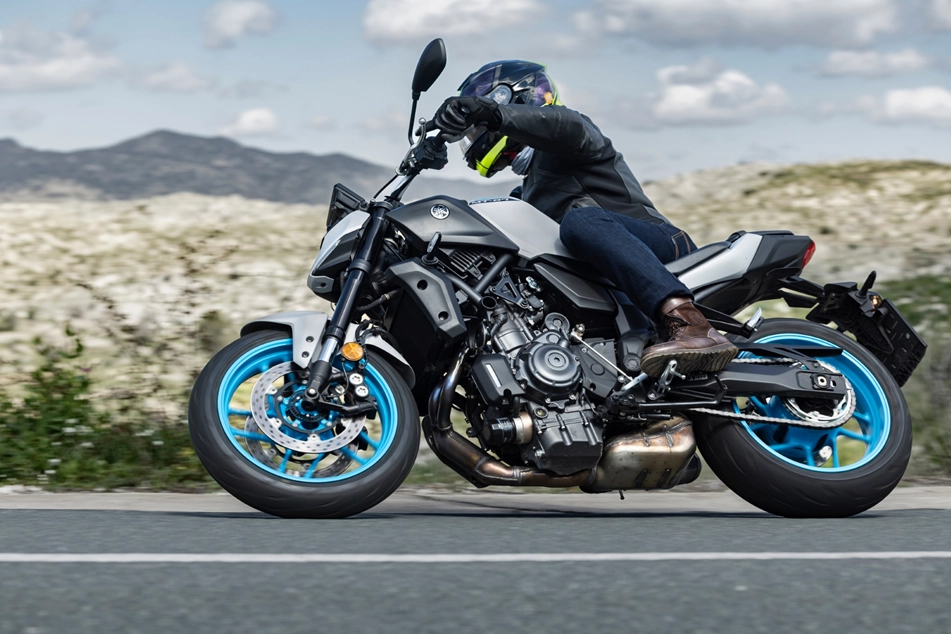
On the road, this engine is a joy to use—smooth, flexible enough to let riders pick their gears in most situations, and impressively economical, averaging mid-60s mpg. The clutch is light, and the gear changes are slick yet precise. New riders will find it easy to build confidence, while experienced ones will still get plenty of enjoyment. The standout feature is the optional Y-AMT, similar to the latest MT-09’s system, which replaces the clutch lever and gear shifter with electronically controlled servo-motors. It offers two automatic modes: D for a laid-back ride with earlier shifts, perfect for city or motorway cruising, and D+ for a sportier feel, holding revs longer before changing gear. There’s also an MT (manual) mode, where shifts are controlled via paddles on the left bar, with the automatic clutch preventing stalls or over-revving. The Y-AMT adds just 2kg to the bike, bringing the total to 186kg, compared to Honda’s more complex—and admittedly slicker—DCT system, which adds around 10kg.
Riders familiar with previous-generation MT-07 models, or those considering trading in their current bike, will be impressed by the significant improvements in the 2025 model. While many of the updates are subtle when viewed individually, together they create a motorcycle that feels sharper, quicker, and, in most cases, easier to ride. For those without experience on earlier MT-07s, the specific enhancements may be less apparent, yet the overall performance, balance, and refinement of this machine will still be evident. The engine retains its engaging character while remaining flexible and approachable for novice riders. The chassis inspires confidence in newcomers as they develop essential skills, while also rewarding experienced riders with capabilities and handling that surpass what earlier models could offer.
The MT-07 faces significantly greater competition this year compared to previous models, and Yamaha has responded with a notable level of effort in this latest update. It appears the company has taken substantial feedback from its customers, applying those insights to design and produce a motorcycle that aligns closely with their preferences and expectations.

Article written by Nige.
Last update: July 2026
Nige commutes to work on one of his ‘trusty’ bikes throughout the year, no matter the weather, usually his FZ6!
He has ridden all over the UK and mainland Europe. He has owned more bikes than he likes to admit to.
We may receive a commission if you purchase a product using the affiliate links on any page of this website. This is at no cost to the purchaser, however does support our website and helps us to continue to build with more great content.