Tour.
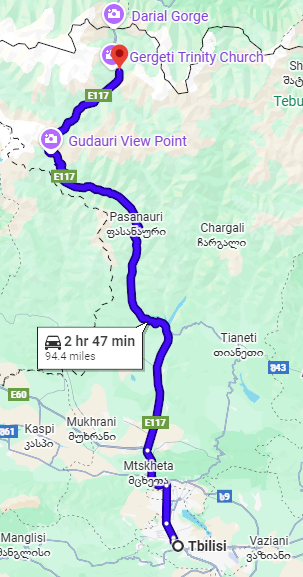
- Miles: 94
- Start: Tbilisi or Stepantsminda
- End: Stepantsminda or Tbilisi
- Time: 3 hours to 1 day
- Suitability: all bikes and riders – advisable adventure bike
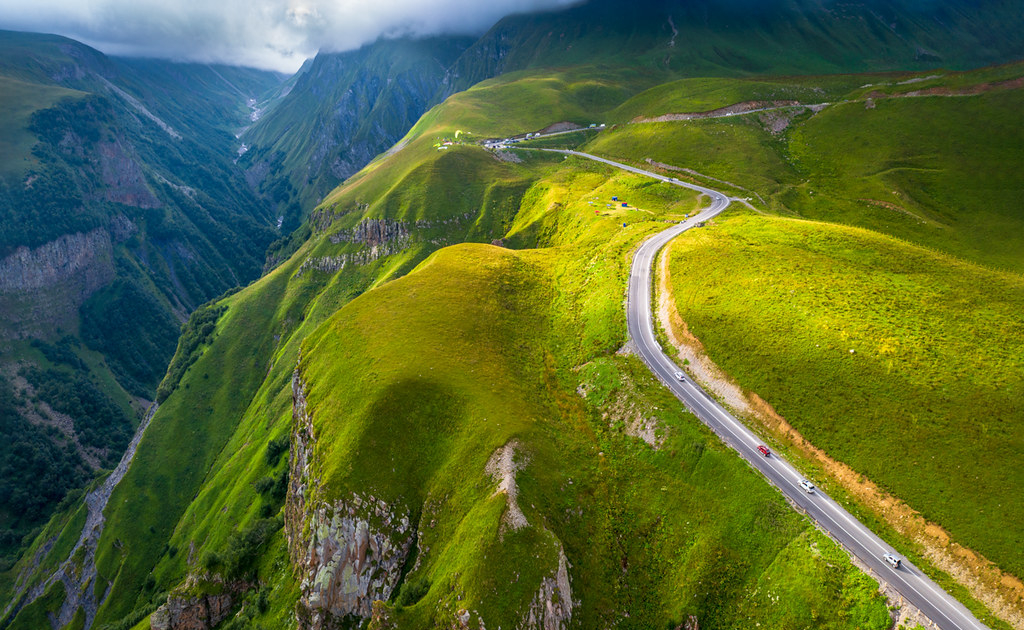
One of the most renowned road trips in Georgia, this historic route from Tbilisi to Russia offers a true adventure, with the journey north providing both breath taking scenery and demanding terrain.
Spend some time exploring Tbilisi before heading out on the ancient road that winds into the Greater Caucasus Range, tracing a millennia-old path once traveled by traders. This route, in use since before the 1st century BCE, was impressively transformed into a proper carriage road in 1783—a remarkable achievement of human ingenuity against nature.
Highlights
Mtskheta, one of Georgia’s oldest and most spiritual cities, still serves today as the headquarters of the Georgian Orthodox Church. Mtskheta, a charming town where the Mtkvari and Aragvi rivers meet, boasts stunning scenery and ancient churches and monasteries that are recognized as a UNESCO World Heritage site for their rich historical significance. Top sights include the Jvari Monastery perched high on a hill with stunning views over the town, the Samtavro Monastery, and the impressive Svetitskhoveli Cathedral.
Ananuri Fortress Complex is a must-see stop along the way, with its 17th-century fortress perched high above the sparkling turquoise waters of the Zhinvali Reservoir. This iconic Georgian landmark features the fortress itself, the Church of the Mother of God, the Church of the Deity, Mkurnali Church, and a bell tower. Just before the paid roadside parking, a small road leads down to Zhinvali Lake, where you’ll find a newly built park and picnic area. With free parking, cozy cafés, boats for rent, and picnic tables, it’s the perfect spot for a relaxing break.
Gudauri, Georgia’s top ski resort, sits 2,192 meters above sea level and transforms into a mountain playground in summer. Activities range from paragliding, horse riding, and mountain biking to quad biking and riding the cable car to Kobi and the Truso Gorge. The area also offers scenic hiking trails to explore. It’s an ideal spot to stay for a few nights if you want to extend your road trip beyond two days.
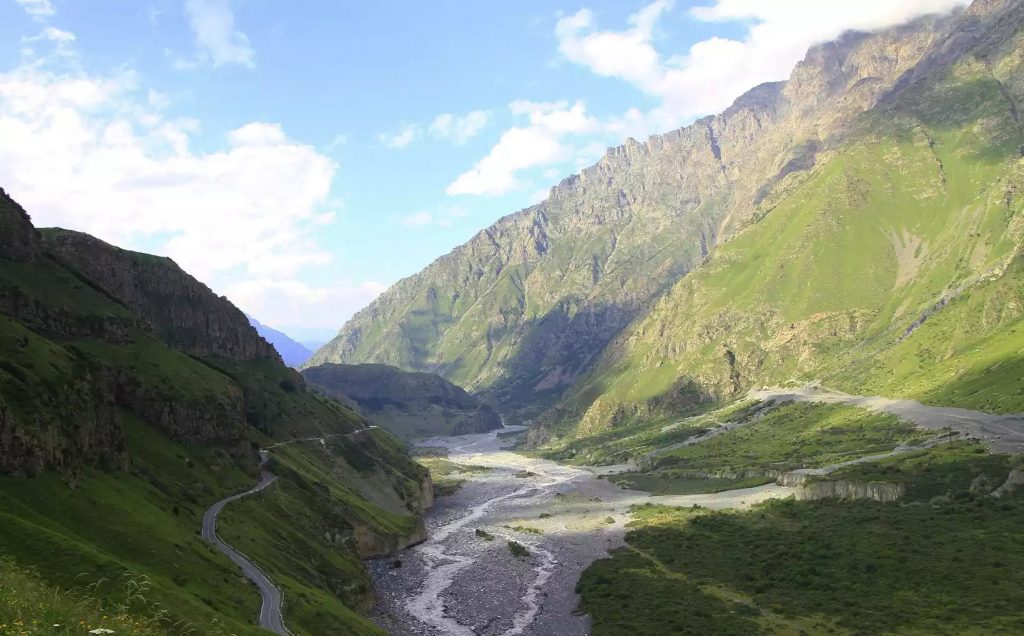
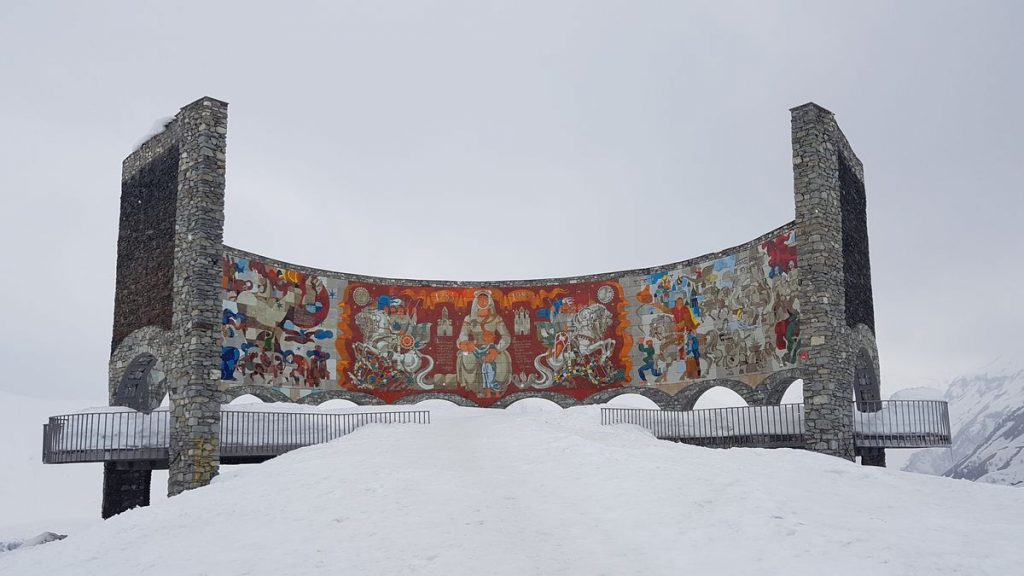
The Russia–Georgia Friendship Monument, located between Gudauri and the Jvari Pass, is a massive concrete structure built in 1983 to mark the bicentennial of the Treaty of Georgievsk and the proclaimed friendship between Soviet Georgia and Soviet Russia. Ironically, just a few miles west lies the border of South Ossetia, a breakaway region annexed by Russia in 2008. The monument is a striking circular stone and concrete edifice that overlooks the breathtaking Devil’s Valley. Inside, a vibrant tile mural wraps around the entire interior, depicting scenes from Georgian and Russian history. From the monument, there are also stunning views along the gorge, with the winding silver Aragvi River glistening far below.
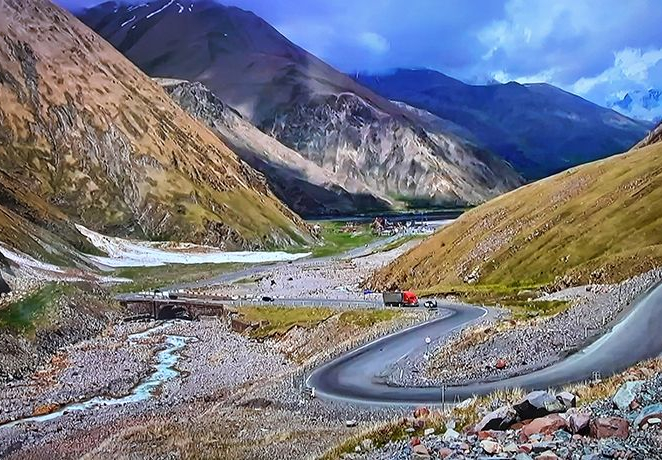
Jvari Pass, also called Krestovy Pereval or Cross Pass, marks the highest point of the Georgian Military Road at 2,395 meters above sea level. At the summit, you’ll find spots to stop for a horse ride into the mountains, sip tea and chacha (a Georgian pomace brandy), or grab a bite to eat while taking in the stunning scenery.
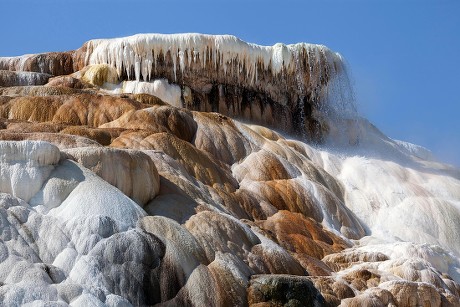
Travertine Mineral Springs, nestled right beside the road, is a fascinating natural wonder created by sulphur-rich mineral springs that leave behind striking limestone formations called travertine. Water still trickles down these formations, which are part of the Kazbegi Protected Areas. Parking can be tricky here due to limited space and its location on a bend, so if you can’t stop on the way in, give it a try on your return trip!
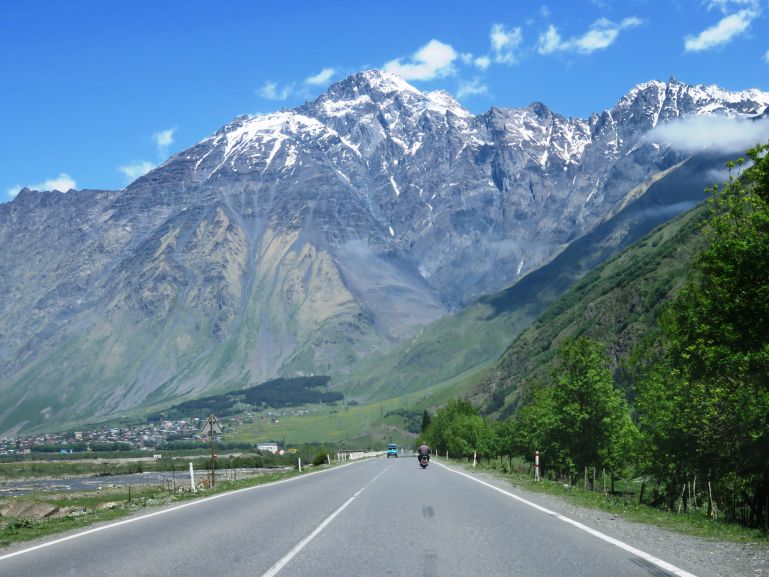
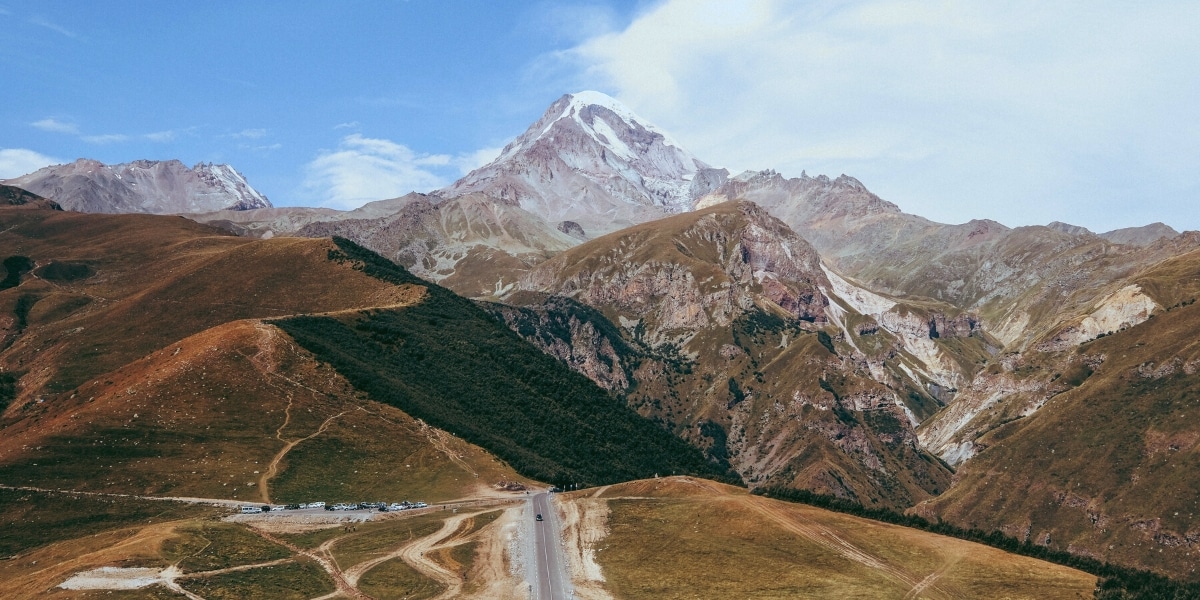
Kazbegi, known officially as Stepantsminda, is the last town before the Russian border. Nestled at the foot of the 5,054m Mount Kazbek, it’s a popular stop along the northern route. The town’s star attraction is the Gergeti Trinity Church, not so much for its architecture—fairly typical of Georgian churches—but for its breathtaking setting. Perched on a high plateau and framed by the towering peaks of the Greater Caucasus, it’s a dream for photographers. Kazbegi is also an ideal base for exploring the area, especially for hikers keen to see the Kazbeg and Gergeti Glaciers. Local homestays and guesthouses offer warm hospitality and hearty homemade Georgian cuisine.
Dariali marks the final notable attractions before reaching the Russian border, featuring the impressive 11-kilometer-long Dariali Gorge and the serene Dariali Monastery Complex, both of which are well worth a visit before commencing the journey southward.
Route & Travel Tips
The route is fairly straightforward, but the mix of road surfaces, occasional landslides, and heavy freight traffic mean you have to stay alert at all times, which for some can take away from enjoying the drive and the stunning scenery around you.
Although Google estimates the drive from Tbilisi to Kazbegi at just three hours one way, it’s not a trip we’d recommend doing in a single day. Realistically, with stops to sightsee, dealing with road and freight traffic, avoiding animals on the road, and slowing down for balconies and tunnels, the journey is more likely to take around six hours.
You can drive the route all year, and a lot of work goes into keeping it open for freight between Georgia and Russia. Still, heavy snow and avalanches can cause sudden closures, making parts of the road impassable for days while emergency repairs take place. If you’re driving it in winter, always bring food, water, and warm clothing.
A new tarmac road from Kazbegi to the Gergeti Church opened in 2018, but as of 2022 it’s closed due to a so-called ‘landslide.’ Most people know there’s no actual landslide and the road is fine, but local 4×4 taxi drivers make more money charging 70 GEL per trip on the old route—a rough ride over rickety bridges and deeply rutted tracks. If you want to visit the church and take in its stunning views, you’ll just have to put up with it.