Rides
Japan is home to several of the world’s most prominent motorcycle manufacturers, including Honda, Yamaha, Suzuki, and Kawasaki, each renowned for their innovation, reliability, and extensive global presence.
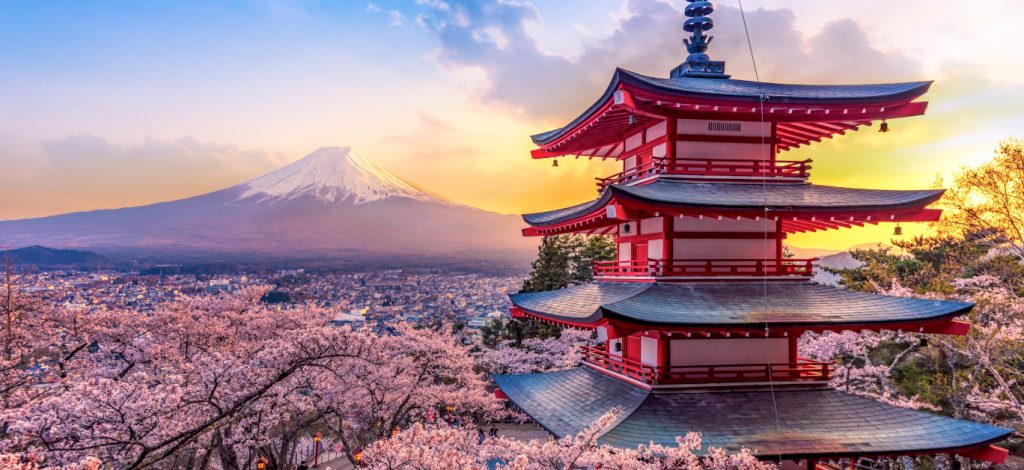
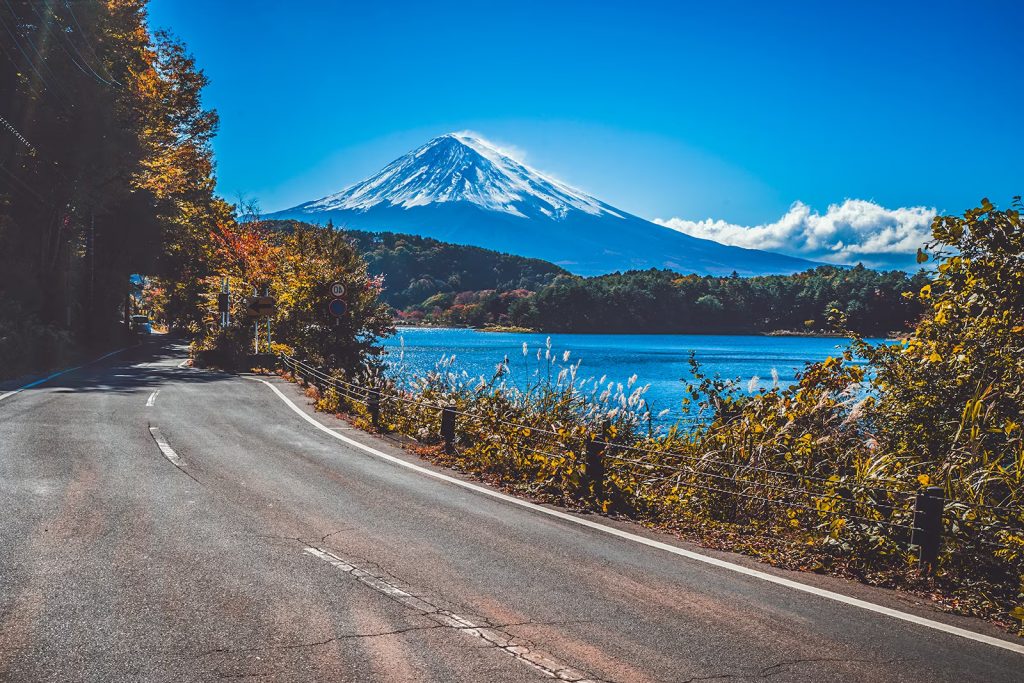
Japan is an island nation in East Asia, situated in the Pacific Ocean off the northeastern coast of the Asian mainland. It is bordered to the west by the Sea of Japan and stretches from the Sea of Okhotsk in the north to the East China Sea in the south. The Japanese archipelago comprises four principal islands along with 14,121 smaller islands. Administratively, Japan is divided into 47 prefectures and eight traditional regions. Approximately 75% of its land area is mountainous and densely forested, concentrating agriculture and its highly urbanized population along the eastern coastal plains. As of 2026, Japan has a population of nearly 123 million, making it the 11th most populous country in the world. Tokyo serves as the nation’s capital and largest city.
Requirements
| Carnet de Passage | no requirements* |
| Insurance | required** |
| International driving permit | require IDP 1949 |
| Travel Visa | no requirements, 90 days per calendar year |
*You don’t need a Carnet de Passage to bring your vehicle into Japan. If you’re arriving by ferry, there’s a special exception that lets you temporarily import it without a Carnet, as long as you fill out Customs Form C 5014. For other ways of entering, like by air or standard sea routes, a Carnet de Passage is usually required.
**Compulsory Automobile Liability Insurance (CALI) is required for all vehicle owners. It provides coverage for bodily injury or death caused to others in accidents where the driver is at fault but does not cover damage to the driver’s own vehicle or injuries to the driver. The coverage is limited, with capped compensation amounts. To ensure comprehensive protection, drivers are strongly advised to obtain voluntary insurance, which can vary in cost based on factors such as vehicle type, driving history, and coverage level. Annual premiums for voluntary insurance generally range from ¥20,000 to ¥100,000 (approximately $150 to $750 USD), while CALI typically costs between ¥12,000 and ¥15,000 annually (approximately $90 to $110 USD).
Riding in Japan.
You need understandable documents.
The police can require the immediate presentation of all driving documents by the roadside, including license, logbook, and insurance, is common in most jurisdictions. If you cannot these documents in a language that the police can understand, there is a likelihood of having your bike impounded.
As a tip, it is to laminate all of your key documents or otherwise waterproof them. It is also highly recommended to scan all your original documents and email them to an easily accessible email address.
It is also worth printing off the Constat Amiable D’accident Automobile, which is used across numerous and other countries (the downloadable one on our website has English as well as French).
A full bike license is essential.
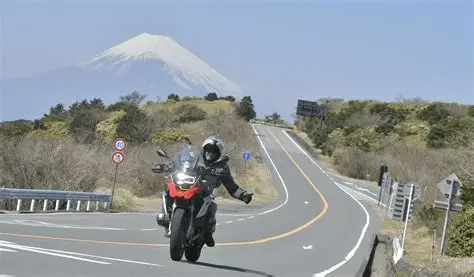
Motorcycling in Japan offers a unique blend of exhilaration and discipline, where the thrill of open-road freedom is balanced by a deep adherence to regulations. The nation’s stringent road safety laws are meticulously enforced, ensuring a structured and secure riding environment. This commitment to order is equally reflected in the motorcycle licensing process, which demands rigorous training, testing, and compliance, embodying the same high standards of precision and responsibility that define Japan’s approach to road safety.
Entry paperwork is required, thankfully no visa is needed.
UK citizens are permitted to enter Japan without a visa for short-term stays, including purposes such as tourism, business, or visiting friends and family, for a duration of up to 90 days. Passports must remain valid for the entirety of the stay and contain at least one blank page to accommodate the entry stamp.
Speed limits.
In Japan, speed limits are determined by the type of road, with maximum limits generally set at 60 km/h (37 mph) on standard roads and 100 km/h (62 mph) on expressways, while certain expressway sections permit speeds of up to 120 km/h (75 mph).
On expressways, the usual speed limit is 100 km/h (62 mph) for passenger cars, while heavy trucks over 8 tons are capped at 90 km/h (56 mph). Certain stretches, such as parts of the Tōhoku and Shin-Tōmei expressways, allow speeds of up to 120 km/h (75 mph).
On ordinary roads, the default speed limit is 60 km/h (37 mph) unless otherwise indicated. In urban areas, the limit is usually lower, around 40 km/h (25 mph), and can drop to 30 km/h (19 mph) in residential neighborhoods.

Please note, this page was correct when written in March 2026.