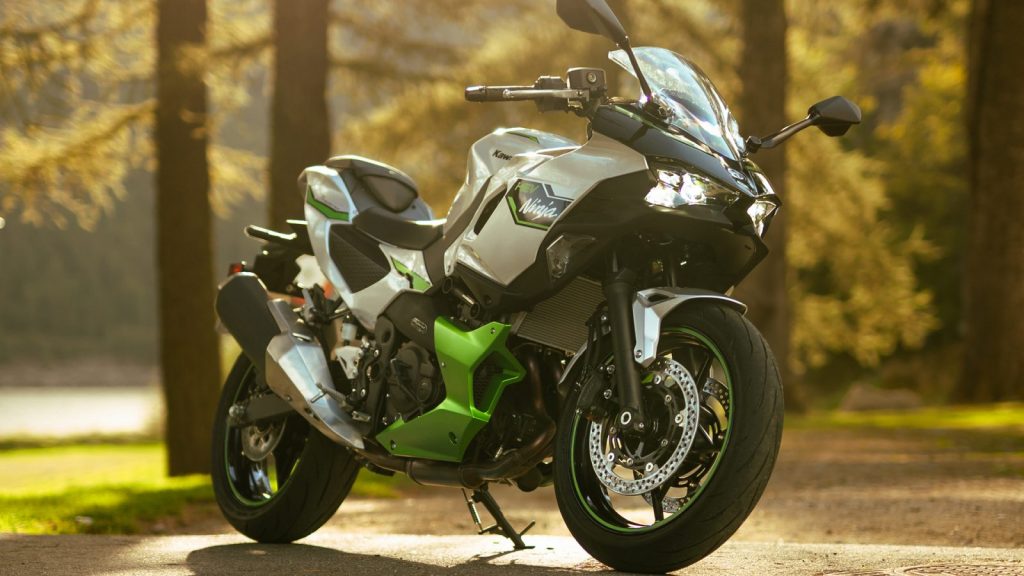
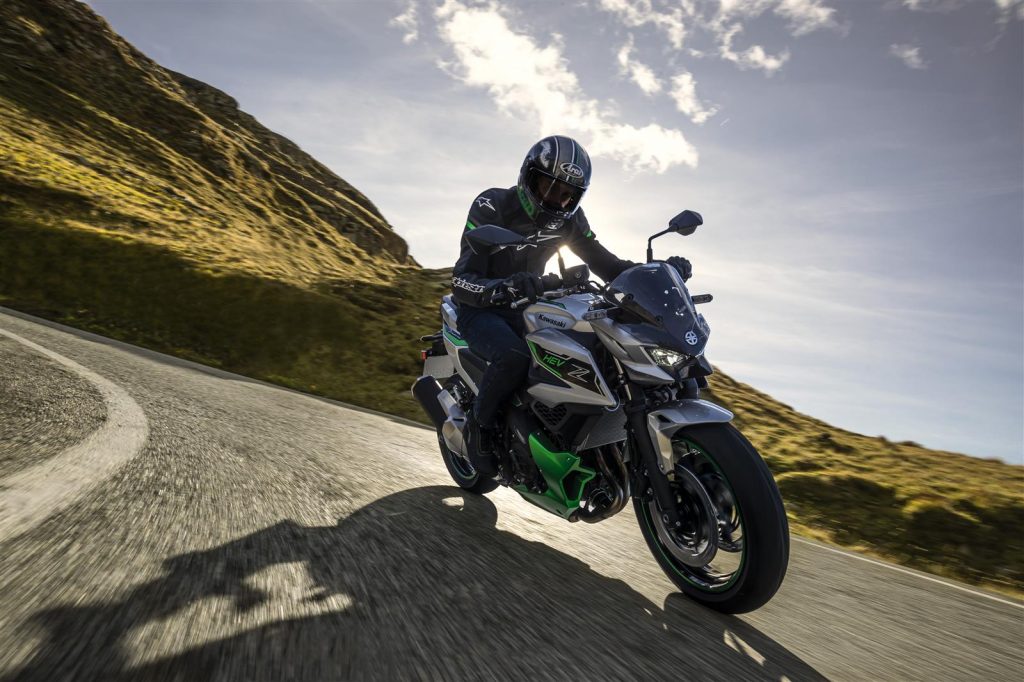
In recent years, the motorcycle industry has experienced rapid and significant technological advancements, yet Kawasaki’s decision to introduce a pair of hybrid models—the Ninja 7 Hybrid and Z7 Hybrid—scheduled for release in late 2023 stands out as one of the most ambitious undertakings to date.

Despite the advanced technology that seamlessly integrates petrol and electric powertrains to deliver enhanced performance, improved fuel efficiency, and a zero-emissions driving mode without the concern of range limitations, consumer interest has remained notably low.
Official data reveals that by mid-2025, only 64 Ninja 7 Hybrids and 39 Z7 Hybrids had been registered in the UK, 18 months after their introduction. Furthermore, Kawasaki UK has reduced the original £11,949 price by £4500, and lightly used ex-demonstration models with minimal mileage are now available on MCN Bikes For Sale for just over £5000 – less than half of their initial retail value.
So, hybrids are a bad idea? Not necessarily. Competitors like Yamaha are developing their own hybrid models – including a petrol-electric MT-09 naked concept – which suggests Kawasaki may just be dealing with a ‘first-mover disadvantage,’ introducing untested tech to the market and giving rivals the chance to learn from their innovations and missteps.
One potential misstep may have been the choice of bike style for the system’s debut, a factor Kawasaki now seems to be addressing. A newly filed patent indicates the company’s intention to implement the hybrid powertrain in a maxi-scooter rather than a traditional motorcycle.
Switching approach
A high-performance scooter is arguably the perfect match for a hybrid, blending the long range of a combustion engine with the option to switch to all-electric power in cities with low- or zero-emission zones.
Scooters like Yamaha’s £14,550 TMax Tech Max and Honda’s £11,499 X-ADV prove that riders are willing to spend serious cash, and the added bulk from a hybrid system blends more easily into a scooter’s shape. Kawasaki once offered the J300 mini-maxi-scooter in the UK, featuring a 299cc single-cylinder engine.
Kawasaki’s latest patent reveals a design innovation in which the battery and fuel tank are repositioned to accommodate a scooter configuration, thereby optimizing the layout to provide the anticipated amount of under-seat storage space. The engine appears to be the same 451cc parallel-twin utilized in the current hybrid models, paired with the identical automated manual transmission. A large electric motor is mounted above the gearbox, configured in the same manner as found on the Z7 and Ninja 7. In its current setup, the liquid-cooled electric motor is mounted onto the crankcase and comes with its own radiator for cooling. The total output is 68.5bhp at 10,500rpm, a bit more than the X-ADV’s claimed 57.8bhp and the Yamaha’s 46.9bhp.
Semi-automatic shifting
While the rival Yamaha TMax is a fully-fledged twist-and-go model, the X-ADV features a semi-automatic DCT system, allowing riders to either manually change gear via a hand shift or let the motorcycle handle gear changes automatically. This concept is akin to the anticipated system on a future Kawasaki hybrid scooter, with the Ninja 7 and Z7 employing a semi-automatic push-button configuration located on the left-hand switchgear. Additionally, the X-ADV offers a pure EV mode for short urban trips, as well as a forward/reverse ‘walk’ mode, which is particularly useful for manoeuvring in and out of tight parking spaces.
Battery positioning
On the Ninja and Zed, the 13kg lithium-ion battery has been relocated from its usual spot under the seat, rotated 90 degrees, and placed in front of the engine’s cylinder head. It now sits transversely beneath an extended front frame designed to accommodate it. A finned casing boosts cooling, enabling longer E-Boost bursts without overheating. To make room, the radiator is lowered, and the fuel tank is moved under the seat, reshaped to maximize the leftover storage space behind it.
The finished motorcycle retains the substantial mass of the engine positioned between the rider’s legs, a characteristic it shares with maxi-scooters such as Honda’s X-ADV. However, the inclusion of full-length floorboards on either side accommodates a scooter-style seating position, offering enhanced comfort and versatility in rider posture.
Maintaining its commitment to hybrid technology could ultimately yield significant benefits for Kawasaki, with the expertise gained from designing and manufacturing the Z7 and Ninja 7 potentially providing a valuable competitive advantage.
Leave a Reply