Maintaining a comfortable riding position on a motorbike is essential for ensuring both safety and overall comfort during a ride. Factors to consider include the correct alignment of the body to reduce fatigue, proper handlebar positioning to maintain control, optimal seat height for stability, and appropriate foot placement to enhance balance. Additionally, ensuring that posture supports a natural spine alignment can help prevent strain and improve endurance over long distances.
- Standard Position: This is the most neutral posture, characterized by an upright back and arms maintained in a slightly flexed position. It promotes optimal control while minimizing strain on the back and shoulders, ensuring both comfort and stability during use.
- The cruiser position is specifically designed to maximize comfort, allowing the legs to extend forward and rest securely on footrests. This posture helps minimize strain on the torso by promoting a natural alignment and evenly distributing body weight, while also offering optimal support to the lower back. As a result, it fosters a relaxed and ergonomic seating experience ideal for extended periods of use.
- Sports Position: Designed for high-speed travel, this posture requires leaning forward with the head and eyes directed ahead. It minimizes aerodynamic drag, enhancing speed and efficiency, but may result in discomfort during prolonged use.
- The delivery bike position closely resembles the sports riding position, with the primary distinction being a slight modification to the handlebar height to enhance stability and improve overall control during operation. This adjustment allows for greater manoeuvrability, particularly when navigating urban environments or carrying loads, while still maintaining an efficient and streamlined posture.
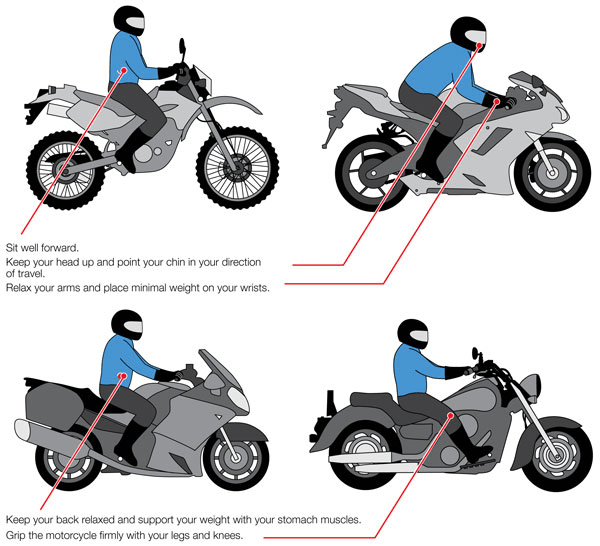
Finding a riding position that ensures both comfort and optimal control is essential for safety and performance. Riders should make adjustments to their posture and positioning in accordance with their individual preferences, physical ergonomics, and the specific characteristics of the motorcycle they are operating. These modifications can enhance overall stability, manoeuvrability, and endurance during rides.