The concept of a motorcycle helmet with a built-in head-up display (HUD) has been around for decades, but after countless false starts, a collaboration between Shoei and French display experts EyeLights means you’ll finally be able to buy one in 2026.

Head-up displays have been used in fighter planes since the early 1960s, later making their way into commercial aircraft, and eventually appearing in production cars by the late 1980s. They put key information right in the operator’s line of sight, allowing quick glances without shifting focus to the instrument panel. Similarly, helmets with built-in HUDs have been around in the military for almost as long, starting with basic systems before the late 60s and evolving into more advanced helmet-mounted displays by the 1990s.
Naturally, there’s been interest in bringing this tech to motorcycles, but attempts to create helmets with built-in HUDs have often hit roadblocks, with well-known flops like Skully—a startup that raised millions for an HUD helmet but never made it to production. Even BMW joined the trend about a decade ago, unveiling an HUD helmet at the Consumer Electronics Show in January 2016.
Although helmets with built-in HUDs have struggled in the past, the tech has now hit the market through add-on kits from brands like Nuviz and EyeLights. EyeLights has teamed up with Shoei to launch the GT 3 Smart, featuring the EyeLights HUD integrated directly into a production helmet. Priced at €1199 (about £1050) and available for pre-order from EyeLights, it’s based on the Shoei GT-Air 3, meets ECE 22.06 standards, and includes features like a drop-down sun visor, which plays a key role in how the HUD works.
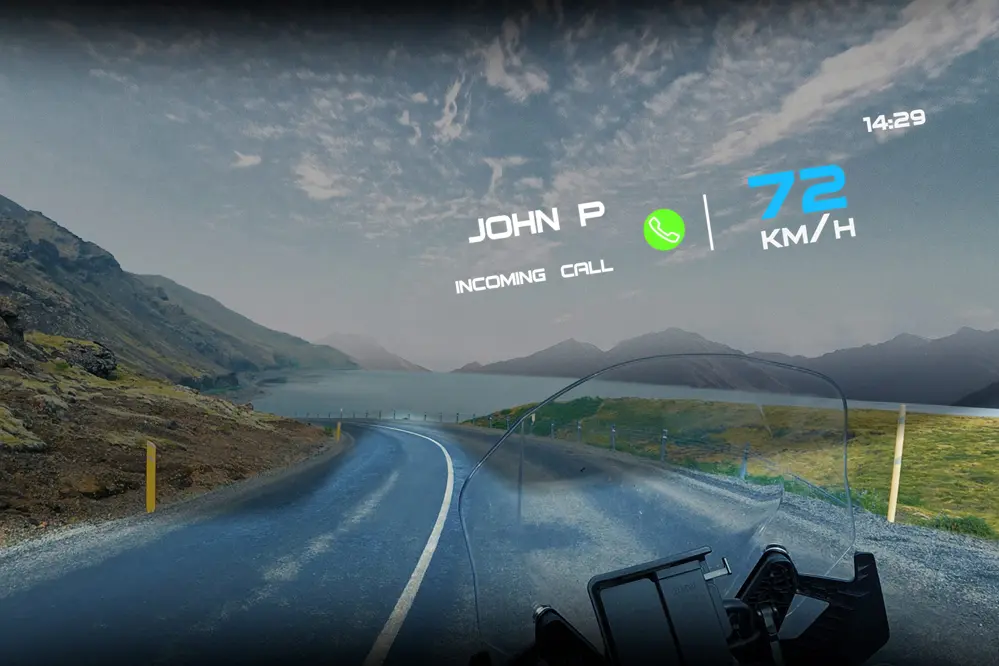
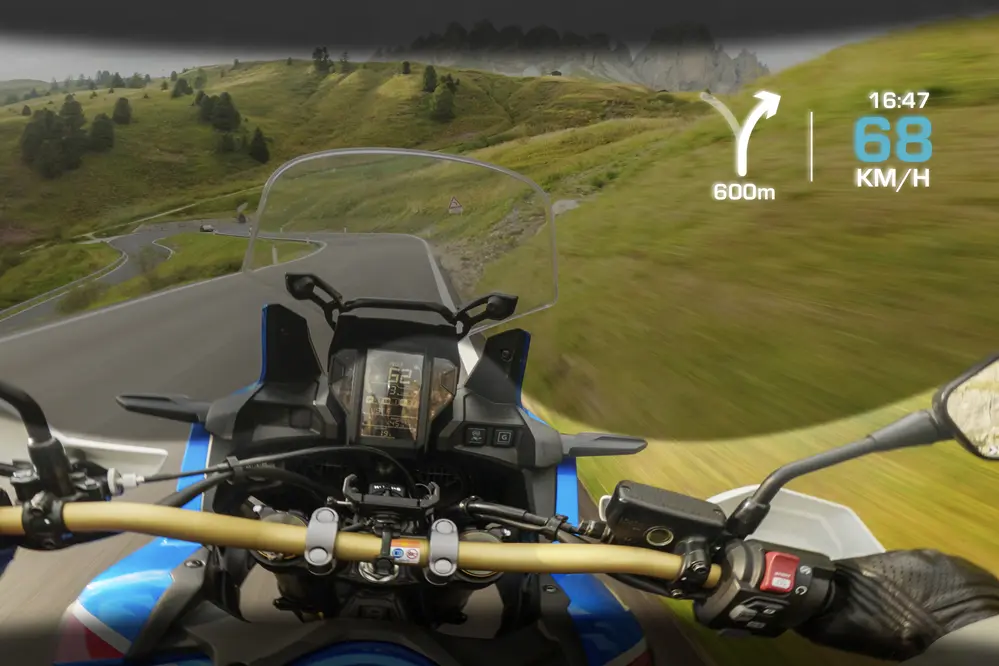
Instead of using a separate prism in front of one eye like EyeLights’ standalone system, the integrated version projects a full HD image from an OLED screen directly onto the drop-down sun visor. With the Nano OLED display positioned at the top right of your vision, above your direct eyeline, you can raise the visor most of the way at night to look beneath it while still seeing HUD information on the remaining strip at the top. The display connects to your phone through a dedicated Android or iOS app, giving access to Google Assistant or Siri for voice control, and relies on Google Maps for navigation and the mini-map shown on the screen. While the interface is kept simple for clarity, it can also display turn-by-turn directions, call details, and music info.
With a mic and speakers already included, it makes sense that an intercom is built in too. Using your phone’s internet connection, it offers group communication with unlimited range and no cap on the number of users, plus an offline mesh mode compatible with other intercom brands’ systems. Power comes from a built-in battery promising 10 hours of use. So, is the HUD helmet finally here? Deliveries aren’t slated until mid-2026, but it sure looks like it might be.
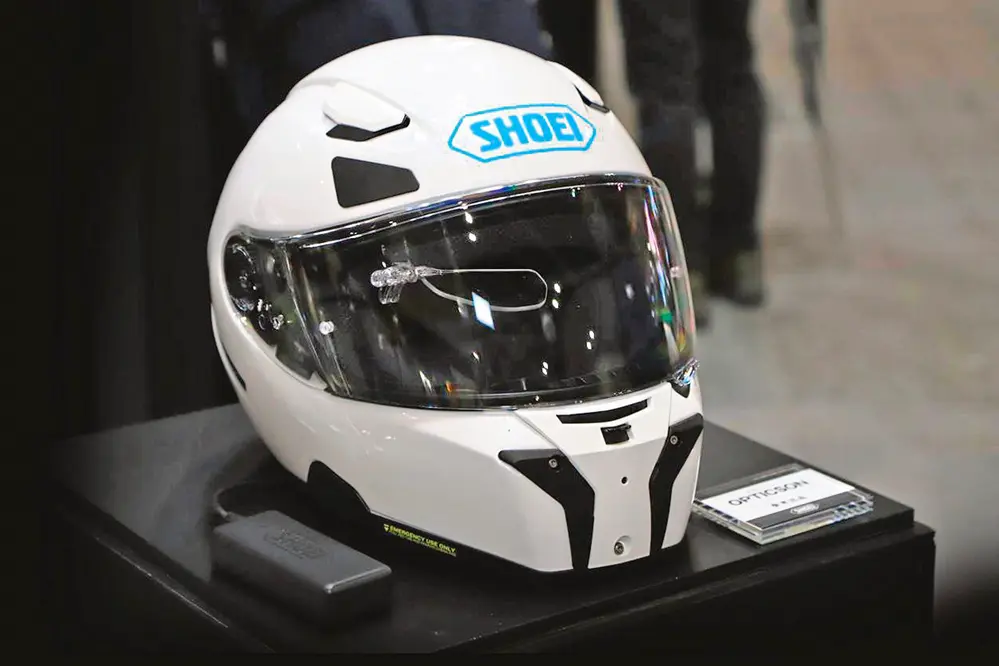
In late 2022, Shoei showcased a planned HUD system at the Osaka and Tokyo motorcycle shows, building on an idea first revealed at CES in Las Vegas back in 2019. Called ‘Opticson,’ it was briefly available in Japan and worked by projecting an inverted image of your chosen display onto a semi-transparent, angled surface—known as the combiner—in front of your eye, which appeared the right way around when reflected. The projector was built into the helmet’s chin bar, sending the image to a combiner on a multi-adjustable bracket that positioned it in front of the rider’s right eye. It offered both X and Y axis adjustments to suit different head shapes and eye positions, and connected via Bluetooth to a dedicated app that let your phone send navigation data for a simple turn-by-turn HUD display.
Leave a Reply